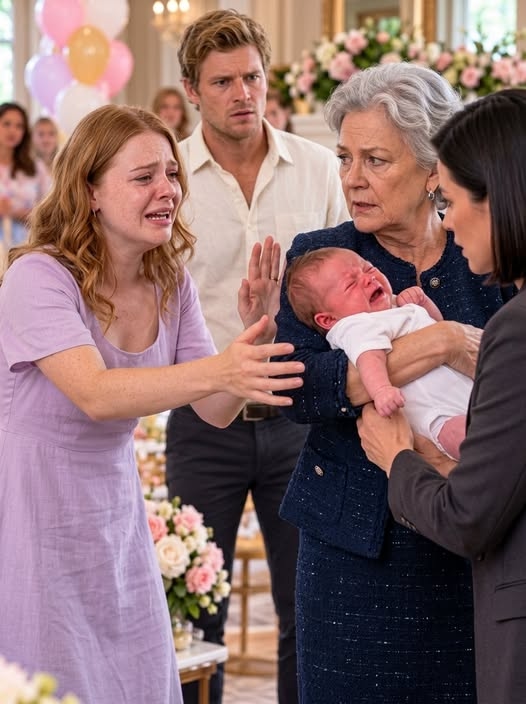
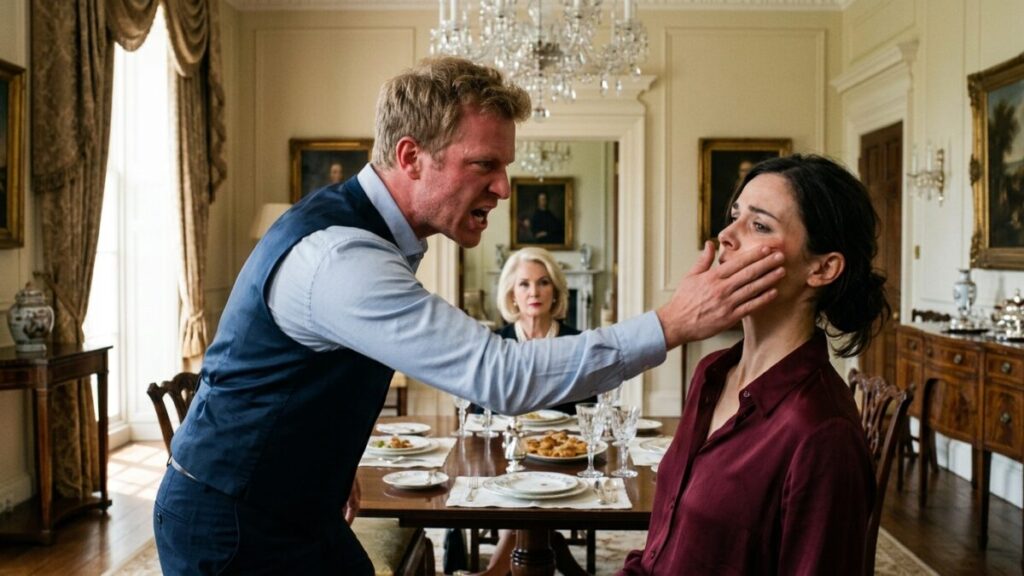
He looked toward the door.
“My father has partners.”
“The Consortium?”
His face drained of color.
For several seconds, he couldn’t speak.
Then he whispered:
“Where did you hear that name?”
I stood.
“Get out.”
“Claire.”
“Now.”
He reached toward me.
I stepped back.
Security opened the door.
Daniel stopped.
His expression changed from pleading to furious.
“You think you’re powerful because you have money?”
I looked at him.
“No.”
“Then what?”
“Because I don’t need your permission to leave.”
He snatched up the agreement.
“You’ll regret this.”
I walked out without answering.
That evening, Rebecca discovered a hidden provision in the proposed agreement.
It was buried in an appendix.
A clause that would have transferred controlling rights over Project Crown if I signed.
But there was something even more disturbing.
The agreement was dated six months before our wedding.
Daniel had already prepared the document.
And the file metadata listed its original author.
Not Daniel.
Not Charles.
Margaret Harrington.
The woman who had laughed when her son struck me had been planning the entire marriage from the beginning.
Margaret Harrington invited me to lunch three days after the wedding.
Her message was brief.
We should talk privately, woman to woman.
I forwarded it to Rebecca.
She advised against meeting at the estate.
Instead, we arranged a recorded meeting with everyone’s consent in a private room at a Manhattan hotel.
Margaret arrived wearing an emerald-green suit.
Pearls circled her neck.
Her silver hair was perfectly styled.
She looked like a woman attending a charity luncheon.
Not someone whose family was facing financial disaster.
“Claire, darling.”
She smiled.
“You look tired.”
“I’ve had a busy week.”
She sat across from me.
“Let’s be civilized.”
“I’d welcome that.”
Margaret ordered tea.
Then she looked directly into my eyes.
“You’ve made your point.”
“What point?”
“You’ve embarrassed Daniel.”
“He struck me.”
She waved a hand.
“Marriage requires forgiveness.”
“Marriage requires safety.”
Her expression cooled.
“You sound exactly like Evelyn.”
I leaned forward.
“Then you knew my mother well.”
Margaret’s smile disappeared.
“Better than you can imagine.”
“At Blackwood?”
Her fingers tightened around her teacup.
“That place destroyed several families.”
“Mine included?”
She did not answer.
I continued.
“Why did you prepare a contract transferring Project Crown?”
The cup rattled against the saucer.
For one brief second, genuine fear crossed her face.
Then she recovered.
“You’re mistaken.”
“I’ve seen the file history.”
“Documents can be misleading.”
“Then explain them.”
Margaret leaned closer.
“Your mother stole something that didn’t belong to her.”
I stared at her.
“What?”
“Project Crown wasn’t hers alone.”
“Who owned it?”
“People who invested everything.”
“Names, Margaret.”
She looked toward the window.
“You don’t understand what you’re interfering with.”
“Then help me understand.”
She smiled sadly.
“Your mother asked the same questions.”
“What happened to her?”
Margaret looked at me for a long moment.
Then she said something I would remember for the rest of my life.
“She was offered a choice.”
“What choice?”
“Give them the system or lose the people she loved.”
I felt my pulse accelerate.
“Who offered her that choice?”
Margaret’s expression hardened.
“Your father.”
The room seemed to contract.
I stared at her.
“That’s a lie.”
“Is it?”
“My father tried to protect the project.”
Margaret laughed softly.
“That’s what Evelyn wanted you to believe.”
She opened her handbag.
Inside was a photograph.
My father stood beside three unfamiliar men.
They were gathered around a table covered with documents.
The date printed in the corner was two months after his supposed death.
Margaret pushed the photograph toward me.
“Your father didn’t disappear because he was innocent.”
I stared at the picture.
“He disappeared because he betrayed them.”
“Who?”
Margaret stood.
“The wrong people.”
She picked up her handbag.
Then she paused.
“Claire, there’s one more thing.”
I looked up.
“Your mother didn’t die from the illness recorded on her death certificate.”
My breath stopped.
Margaret’s expression became almost gentle.
“She died because she finally found out where your father was hiding.”
Then she walked away.
I did not trust Margaret Harrington.
I also knew that ignoring a disturbing allegation would not make it disappear.
Rebecca assembled a team of investigators, forensic accountants, and legal specialists.
We began with documents.
Medical records.
Estate filings.
Corporate correspondence.
Archived insurance reports.
And the restricted files surrounding my mother’s final months.
The first discovery came from a storage facility in New Jersey.
My mother had rented a secure unit under an old corporate name.
Inside were six sealed containers.
Most held technical records.
One contained photographs from Blackwood.
Another contained personal correspondence.
And the last held a small black notebook.
My mother’s handwriting filled every page.
In the beginning, the entries discussed software architecture.
Later, they became more personal.
Andrew says Charles cannot be trusted.
Thomas believes the servers have been accessed.
Margaret knows more than she admits.
Then the entries stopped for several pages.
When they resumed, the handwriting looked hurried.
I found the payment records.
Andrew was involved.
I don’t know whether he acted willingly.
I stared at the sentence.
Rebecca read over my shoulder.
“This could change things.”
I turned the page.
My mother had written:
If Claire ever learns what happened, she must understand that I did not abandon Andrew.
I refused to surrender the truth.
The next page contained an unfamiliar address.
A private clinic in Vermont.
Julian immediately recognized the name.
“That’s where Evelyn received treatment before she died.”
I looked at him.
“Was her death investigated?”
“Not beyond the ordinary medical process.”
“Why?”
“Her physicians believed her illness explained the decline.”
I closed the notebook.
“Margaret says otherwise.”
Rebecca spoke carefully.
“We need verified medical evidence before drawing conclusions.”
I nodded.
But my instincts told me the notebook was leading somewhere.
That afternoon, Detective Ruiz contacted us.
Investigators had located a retired laboratory technician who worked at Blackwood.
His name was Henry Mason.
He agreed to speak with us through counsel.
Henry was seventy-eight.
His hands shook when he entered the room.
Popular Posts
→- 1
- 2
- 3
- 4




Recently Viewed
Stories you read recently will appear here.