“Ms. Helen,” she said, shaking my hand firmly. “I regret that we meet under these circumstances.”
“Me too,” I said, “but I’m glad you’re here.”
She sat in the chair beside my bed and opened her briefcase.
“Dr. Henry brought me up to speed on the situation. Your son and daughter-in-law believe you only have days to live and are preparing to inherit, but I need you to tell me everything from the beginning. Every detail matters.”
For the next hour, I told her everything—the accident, the false diagnosis, Mark’s reaction, the conversations I had overheard, the murder plot with the hospital employee, the gambling debts, the appraisers, everything.
Sarah took notes on her tablet, nodding occasionally.
When I finished, she looked up.
“This is more serious than I thought. We’re not just talking about greed, Ms. Helen. We are talking about conspiracy to commit murder. That’s prison time.”
“I want them to pay,” I said firmly. “I want them to face the consequences for every horrible thing they’ve planned.”
“And they will,” Sarah replied, “but we need to build a solid case. The conversations you overheard are valuable, but we need recordings, documents, physical evidence.”
“Brenda is installing cameras tomorrow.”
“Excellent. But there’s more we can do.”
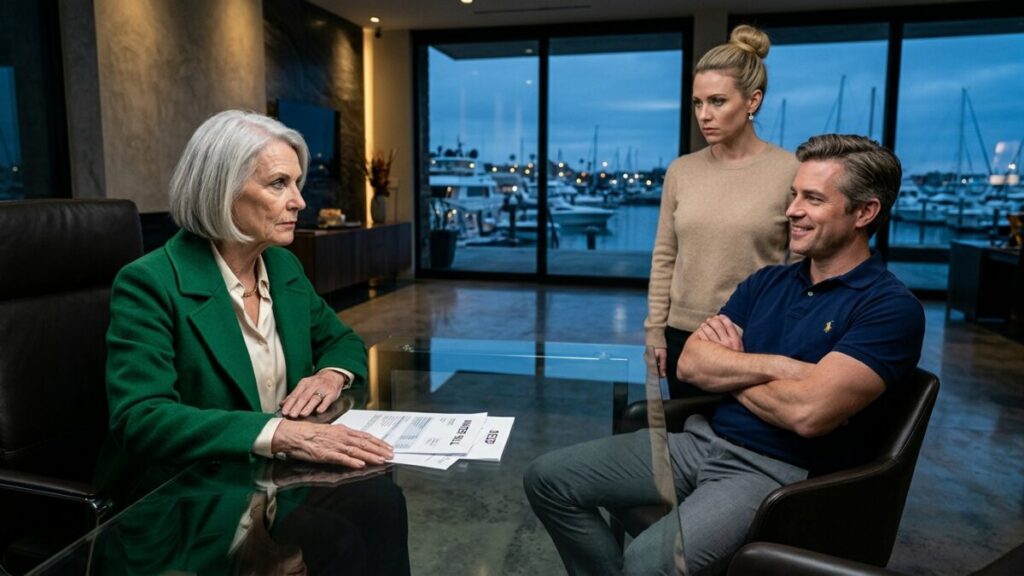
Sarah pulled several documents from her briefcase.
“We need to revise your current will and trust. Who is the primary beneficiary?”
“Mark,” I admitted. “Everything is in his name. I thought it was the right thing to do. He’s my only son.”
“Not anymore,” Sarah said. “We are going to draft a new will and trust tonight—one that Mark and Rachel will never see until it is too late.”
We spent two hours working on the documents. Sarah was meticulous, explaining every clause, every legal protection.
The new will named my brother Michael, who lives in Oregon, as the principal beneficiary, established a trust for several charities focused on veterans, and left Mark a minimal fifty thousand dollars—the legal minimum—so he couldn’t challenge the document by claiming accidental omission.
“We will need witnesses for the signing,” Sarah said. “Brenda can be one. We need two, and preferably people who have no interest in your estate.”
“Dr. Henry,” I said. “He can be the second.”
“Perfect. I will contact them tomorrow to come and sign. In the meantime, this document remains in my absolute custody. Mark will not know of its existence until the exact moment we decide to reveal it.”
I signed the new will with a trembling hand—not from weakness, but from emotion. It was my first real strike against Mark, the first piece of the puzzle falling into place.
“Now,” Sarah continued, “I need you to give me access to your bank accounts, your properties, everything. I’m going to run a full audit. If Mark has been stealing—and I suspect he has—I’m going to find every penny.”
I gave her all the account numbers, all the passwords, all the documents I had stored in my private safe deposit box.
Sarah worked quickly, taking photos of everything with her phone.
“One more thing,” she said before leaving. “I need you to keep pretending. Keep being the dying, trusting mother. Every day they think they are winning is one more day we have to gather evidence.”
“I can do that,” I said. “I’m a better actress than they think.”
Sarah smiled for the first time.
“I know. The simple fact that you are planning this while they believe you are dying tells me you are an extraordinary woman, Ms. Helen.”
When she left after two in the morning, I felt something I hadn’t felt in days—hope, control, power.
Mark and Rachel returned at three, drunk and loud. I heard them stumbling up the stairs, laughing like teenagers.
“I won two thousand,” Mark was saying. “Two thousand damn dollars in one night. It’s a sign.”
“Things are turning around for us,” Rachel replied. “We’ll finally have what we deserve.”
They went into their bedroom across the hall from mine and continued talking. I turned up the volume on the intercom.
“When is the appraiser coming?” Mark asked.
“Tomorrow at ten. I told him to come through the back door to be discreet,” Rachel said. “Your mother can’t see him.”
“Perfect. And the transfer papers—I have them ready. We just need her signature. Even if she’s weak, even if she can barely write, a mark is enough. My cousin, the notary, already knows what to do. We’ll pay him five thousand to look the other way.”
“And what if she refuses to sign?” Mark asked.
There was a pause. Then Rachel said something that left me breathless.
“Then Frank does his job ahead of schedule. Either way, in four days maximum, she won’t be a problem anymore.”
“I like the way you think,” Mark laughed.
I recorded every word on my phone. Every single damn word.
The next day, Brenda arrived early with a grocery bag that no one checked. Inside were the three tiny cameras—small, button-sized, with a Wi-Fi connection directly to an application on my phone.
“Where should I install them?” she whispered.
“The main living room where they sit and talk—put it inside the floral arrangement on the mantelpiece,” I said. “The second one in the study behind the books on the shelf, and the third one in the dining room, stuck under the hanging chandelier.”
Brenda worked quickly and silently while Mark and Rachel had breakfast on the patio. In twenty minutes, all three cameras were installed and working.
I checked the app on my phone. The images were clear. The audio was perfect.
“Excellent work, Brenda.”
“To serve you, Ms. Helen,” she murmured. “These two don’t know who they messed with.”
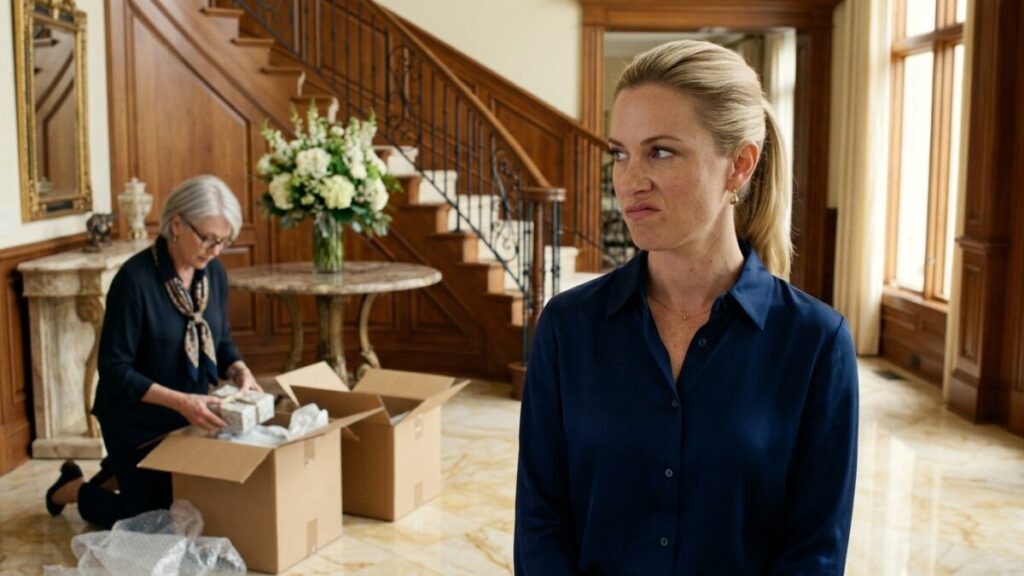
At ten o’clock sharp, just as Rachel had said, the appraiser arrived—a man in his fifties with a briefcase and a professional camera. Mark led him in through the garden door.
From my room, through the cameras, I watched them move through my house like vultures. The appraiser took photos, made notes, evaluating every piece of furniture, every artwork, every detail.
Popular Posts
→- 1
- 2
- 3
- 4




Recently Viewed
Stories you read recently will appear here.