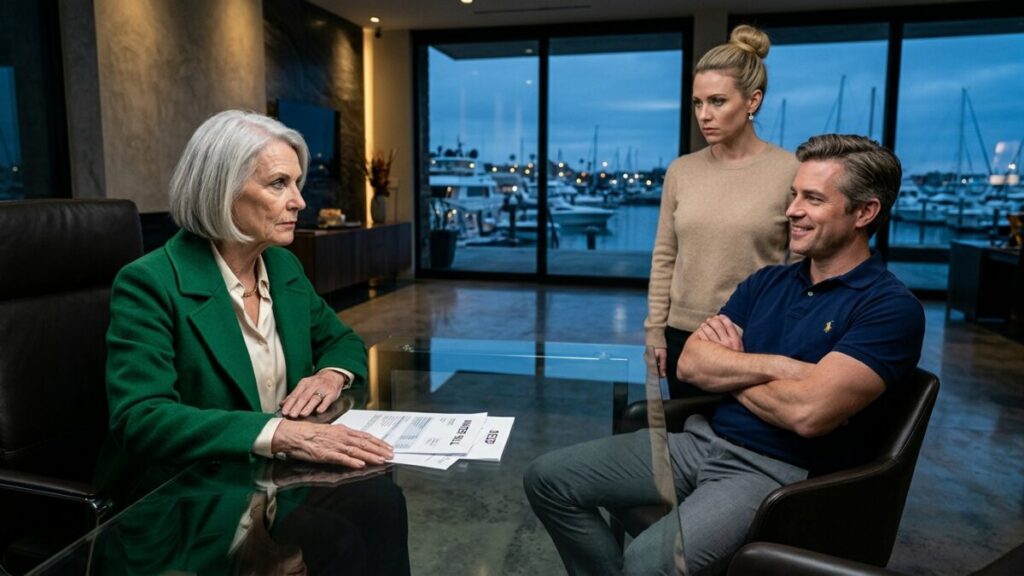
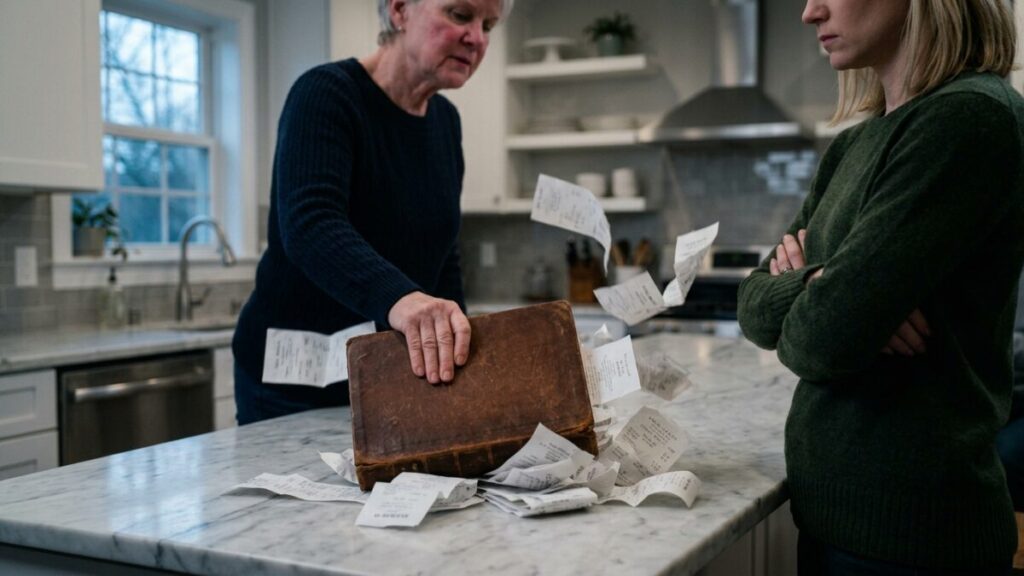
That same afternoon, another unexpected visitor arrived—Deborah, Rachel’s mother, a woman in her mid-sixties who had always been distant from me.
“Ms. Helen, I know I have no right to be here,” she began in a trembling voice, “but I needed to talk to you.”
“Come in, Deborah,” I said. “Sit down.”
She sat on the edge of the sofa, nervous, wringing a handkerchief in her hands.
“I came to ask for your forgiveness—for my daughter—for not having seen what was happening, for not having stopped her.”
“You didn’t know,” I told her.
“I should have known,” Deborah said. “The last few months, Rachel was different. She was spending money like crazy—buying expensive things, bragging about the coming inheritance. I thought Mark had gotten a good job. I never imagined they were stealing from you.”
“Did you know anything about the plan with Frank?” I asked.
Deborah turned pale.
“The plan to kill you? God, no. I found out when they were arrested. I almost had a heart attack. My own daughter planning a murder.”
“I’ve gone to see her in jail once,” she continued. “I couldn’t bear it. She lied straight to my face. She said it was all Mark’s fault, that she was a victim. But I heard the recordings that came out in the news. I heard her laughing about your death. That’s not the daughter I raised.”
“People change when money is involved,” I said.
“My grandchildren ask me where their mom is,” Deborah whispered. “I don’t know what to tell them. How do you explain to a six-year-old that his mother is in jail for trying to kill his grandmother?”
My heart ached. The children were always the ones who suffered the most in these situations.
“Where are they now?” I asked.
“With me,” Deborah said. “Social services gave me temporary custody. But Ms. Helen, I don’t have the resources. I live on my pension. I can barely give them the basics.”
“Deborah,” I said, “listen to me closely. Those children are my grandchildren. They will not pay for their parents’ sins. I am going to establish a trust for their education, health, and basic needs. They will have everything they require.”
Deborah began to weep.
“I don’t deserve your kindness. My daughter tried to kill you.”
“Exactly,” I said. “Your daughter—not you, not the children. Kindness isn’t about deserving. It’s about doing the right thing.”
She hugged me, crying for several minutes. When she left, I felt a little lighter. At least something good would come out of this nightmare.
The date for the preliminary hearing approached. Sarah prepared me to testify, warning me it would be difficult to see them again.
“Mark will do everything possible to manipulate you emotionally,” she explained. “He will cry, beg for forgiveness, play the victim. You need to be mentally prepared.”
“I am,” I said.
But I wasn’t really.
Nothing could have prepared me for seeing my son handcuffed, dressed in orange, looking at me with a mixture of rage and plea.
The judge read the charges: conspiracy to commit homicide, grand theft, fraud, document forgery, tax evasion, attempted flight. The list seemed endless.
“How does the defendant plead?” the judge asked.
Mark’s defense attorney—an expensive man paid with the little that remained in the accounts before they were frozen—stood up.
“Your Honor, my client pleads not guilty. We argue that he suffered a mental breakdown due to the stress of seeing his mother ill. His actions, while questionable, had no real criminal intent.”
Sarah almost laughed out loud.
“Your Honor,” she said, “we have recordings of the defendant celebrating his mother’s imminent death. We have evidence of systematic theft for years. We have documents proving he planned to flee the country. This was not a mental breakdown. It was a calculated and premeditated plan.”
The judge reviewed the documents.
“Bail is set at two million dollars,” he said.
Mark did not have two million. He didn’t even have two hundred thousand after all his accounts were frozen.
“Your Honor,” his attorney pleaded, “that amount is excessive. My client has family—children who depend on him.”
“Your client attempted to murder his own mother for money,” the judge replied dryly. “Bail is maintained. Next case.”
Mark looked at me as the guards led him away.
“Mom, please don’t leave me here. Please.”
I maintained a neutral expression, but inside my heart broke into a thousand pieces.
Rachel had her hearing immediately afterward. Her strategy was completely different. She cried, pleaded guilty to some minor charges, offered to testify against Mark in exchange for a reduced sentence.
“My husband manipulated me,” she sobbed. “I only wanted to protect my children. He threatened me, saying if I didn’t cooperate, he would take the children away.”
More lies.
The recordings clearly showed she was an enthusiastic participant, not a manipulated victim.
But the legal system is like that. The one who speaks first sometimes gets a better deal. The prosecutor accepted her offer.
Rachel would testify against Mark, return all the money she could, and in exchange would receive a sentence of seven to ten years instead of fifteen to twenty.
When we left the court, Michael took my arm.
“How do you feel?”
“Like I just buried my son,” I said, “except he’s still alive. Just a stranger with his face.”
“I’m sorry, sis.”
“Me too.”
That night, I couldn’t sleep. The images from the hearing kept repeating in my mind: Mark in handcuffs, his pleading eyes, his broken voice asking for help.
But then I remembered his other words.
“You’re finally going to die, Mom. All your money will be mine.”
And the pain transformed back into resolution.
The next morning, I received a call from the prison. Mark was requesting a visit.
Sarah advised me not to go.
“You have no obligation to him, and anything you tell him can be used against him or for him in the trial.”
Popular Posts
→- 1
- 2
- 3
- 4




Recently Viewed
Stories you read recently will appear here.