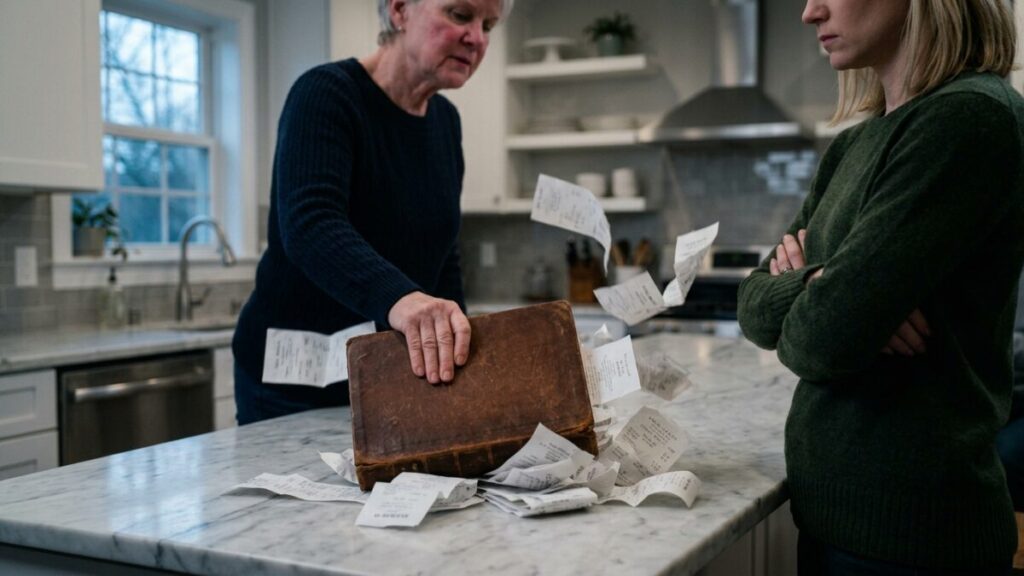
What I needed now was distance, not drama. I started sorting through old boxes I hadn’t opened in years. Not the emotional kind with photos or memories, but the ones with paperwork, tax records, mortgage stubs, receipts from the first repairs we ever made to the cabin. I needed to remind myself who I used to be.
Not someone forgotten or brushed aside, but someone who built things from scratch, someone who paid her dues. Buried in one of the folders was a document I hadn’t seen in a long time. It was from a community development board. Years ago, I had donated part of the land behind the cabin to the township to preserve it as a walking trail.
I had forgotten about it. But as I reread the letter from the county, I realized it still held my name. Not the trust’s, mine. It gave me an idea. I reached out to an old contact, Marci, who now worked at a local nonprofit that focused on environmental education. She remembered me.
She said she still thought of the cabin as one of the most peaceful places she’d ever visited. I didn’t tell her what happened, just said I wanted to talk about possibly creating a legacy project, a fund or program that could use what was left of the land or its memory for something meaningful. She was thrilled.
She said she’d speak to the board, that maybe even if I no longer owned the property, we could create a community story project, one that used the space as inspiration, a way to teach local kids about heritage and respect for history. I hadn’t expected that spark of hope, but it came. Small, quiet, like the first flicker of light before sunrise.
Still, even as I explored those new paths, something else stayed with me. The image of that altered photo, the slow realization that it wasn’t just about the cabin. It was about who I had become in my daughter’s eyes, disposable, optional, like an old piece of furniture you quietly replace when no one is looking.
That night, I took out my old journal and flipped to a blank page. I didn’t write poetry or anything dramatic. Just a list. A plain quiet list of what I still had. My name, my hands, my story, the things no one could transfer or edit or crop out.
It felt good to write it, to see it there in ink. It wasn’t about revenge. It was about clarity, about reentering myself after being pulled so far from who I used to be. Later that week, I visited the local library and found a shelf of community history binders, old newspaper clippings, photos, even a few student essays from long ago about the lake and its surroundings.
There, wedged in the middle of a yellowing page, was a picture of the cabin. Mine, before the renovations. The porch still had the original swing. The dock was smaller, but it was unmistakable. I made a copy and took it home. I taped it to my refrigerator.
It sounds silly, but it gave me something solid to hold on to, proof that I had existed there, that my presence had mattered. Desiree could sell property. Mitchell could host parties. Sylvia could smile for cameras, but I had been the one to plant trees, to dig the garden beds, to patch the roof.
The cabin may no longer belong to me on paper, but I carried its truth in my bones, and no one could take that away. It was a Sunday morning when I drove past the lake for the first time in months. The sun hadn’t fully risen, and the fog still clung to the surface of the water.
For a second, I almost forgot what had happened. I almost let myself believe that nothing had changed. That I’d be pulling into my gravel driveway, hearing the soft crunch of tires as I parked near the porch. But the gate was locked. A new sign had been installed.
Modern flat lettering. The name of the new owners was printed across the bottom along with a security company’s logo. It looked cold, clinical, nothing like the place I had once called home. I didn’t linger. I parked off the road and walked along the trail that still cut behind the cabin.
The section I had donated years ago hadn’t changed much. The trees were taller now, the path a little more worn, but the air felt the same. Damp pine, moss, and something softer, like the memory of something good. As I walked, I saw the dock come into view through the trees.
Not the main one, a smaller one we had built ourselves years before Mitchell added the bigger one for his boat. It looked neglected now, the wood gray and splintered, but it was still there. I sat down at the edge and let my feet dangle over the water. I didn’t cry.
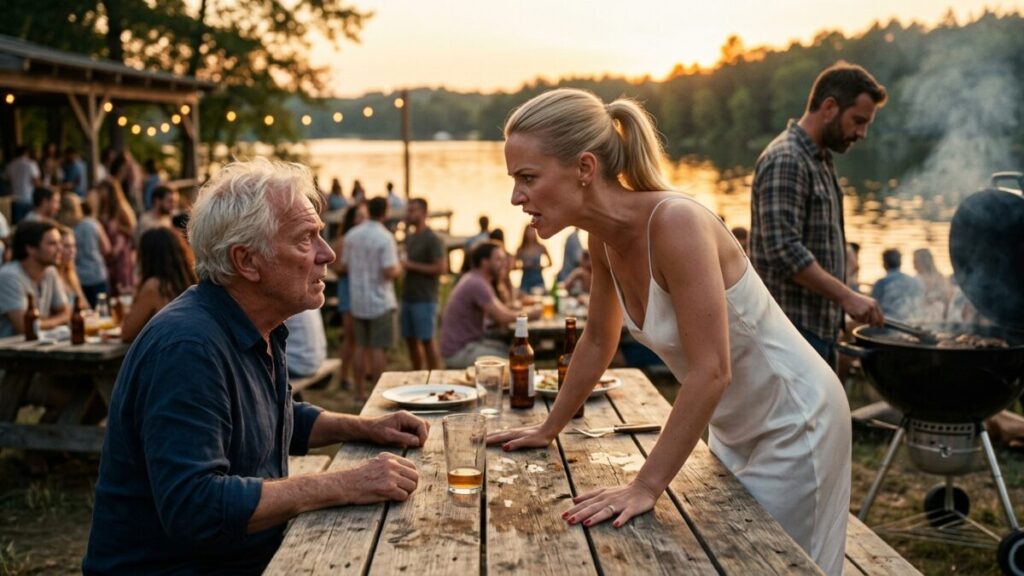
I didn’t curse. I just breathed deep and slow, letting the stillness surround me. That’s when I heard laughter. It came from the main house. Through the trees, I could make out figures on the porch. Music, glasses clinking, another event, another gathering. Desiree’s voice carried across the water.
She was greeting guests. Her tone bright, performative. She used to speak like that in college when she was trying to impress professors. Now it had become her default setting. Smooth, polished, untouchable. Sylvia stood beside her. She was wearing something expensive, her posture perfect.
I watched for a minute, then turned away. It was strange realizing they had filled the space with so much noise, yet I felt nothing. No envy, no anger, just distance, the kind that isn’t measured in miles, but in understanding. Back in my car, I didn’t head straight home.
Popular Posts
→- 1
- 2
- 3
- 4




Recently Viewed
Stories you read recently will appear here.