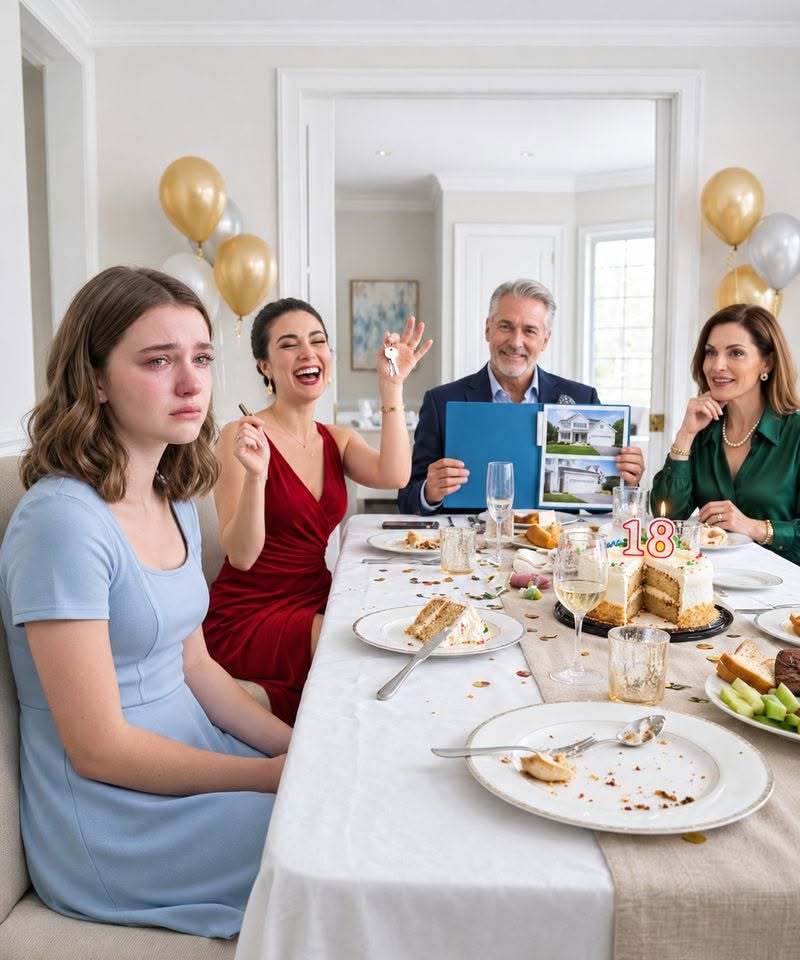
“I knew he helped us with housing, but I never understood all the paperwork.”
I watched her carefully.
After everything I’d learned, I wasn’t ready to accept anyone’s memories as proof.
“Marian is reviewing the agreement,” I said. “I don’t want to make assumptions.”
Mom nodded.
“That’s fair.”
Then she looked down at her hands.
“I didn’t come here to ask about the property.”
“Why did you come?”
“Because you asked me to.”
It was such a simple answer that I didn’t know what to say.
For seventeen years, I’d waited for my mother to visit. Yesterday, she’d arrived to claim an inheritance.
Today, for the first time, she’d come because I wanted to speak with her.
We talked for nearly an hour.
She told me about her recovery, her years of avoiding Grandpa, and the shame she’d used as an excuse for staying away.
I listened, but I didn’t promise forgiveness.
When she asked whether we could meet again, I told her we could take things slowly.
Dad remained angry about the will, and I made it clear that neither his financial problems nor the unresolved property agreement would change my boundaries.
Mom accepted that too.
Over the following weeks, I began putting my own life back together.
I returned to my classes and met with the nursing program adviser about completing my clinical training. For the first time, I could plan my education without worrying that reducing my work hours would leave me unable to pay my bills.
I also began sorting through Grandpa’s belongings.
I kept his favorite flannel shirts, the gardening books covered in his handwritten notes, and the photograph of us standing beside his roses when I was six.
I didn’t change his bedroom immediately.
Some mornings, I still expected to hear him moving around upstairs.
But slowly, the house began to feel less like a place where I’d lost him and more like the home he’d trusted me to care for.
Marian continued reviewing the second trust and the Bell House agreement. She reminded me that the probate hearing would determine the outstanding estate matters and that the separate property documents required careful examination.
I didn’t know what the court would decide about the payments my parents had received.
I didn’t know whether my relationship with Mom would ever become something comfortable.
And I still didn’t know what Grandpa had intended me to discover at Bell House on my twenty-third birthday.
Those questions would have to wait.
One afternoon, I found the two black garbage bags Mom had handed me on the morning after the funeral.
They were still folded beside the hallway closet.
I carried them into the kitchen and stood there remembering how easily she’d expected me to pack up seventeen years of my life.
Then I used them to collect some old papers and broken household items that needed throwing away.
The house wasn’t emptying.
I was finally making room for my future.
Before going upstairs, I stopped beside Grandpa’s photograph.
“I wish you were here,” I whispered.
I couldn’t ask him why he’d kept the letters or what the steel key would eventually reveal.
But I remembered the message he’d recorded for me.
The house was mine because he’d wanted me to have a choice, not because I owed him the rest of my life.
My parents had returned believing that his death meant they could take everything.
Instead, I had learned that the man who raised me had spent his final months making sure I would never have to depend on them for a home again.
I placed the Bell House key safely beside his letter.
There were still answers waiting for me.
But whatever I discovered next, I would be the one deciding what to do with them.
Popular Posts
→- 1
- 2
- 3
- 4




Recently Viewed
Stories you read recently will appear here.