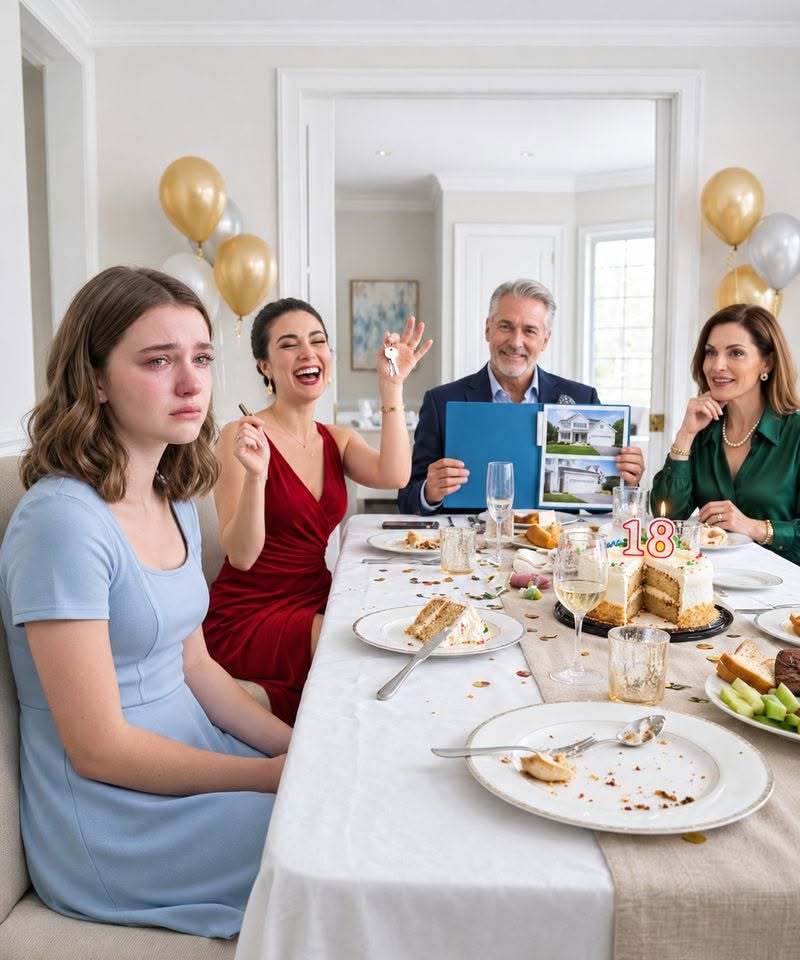
“Before we discuss the property, Harold left a letter for you.”
She handed me a cream-colored envelope with my name written in Grandpa’s familiar handwriting.
I opened it carefully.
He wrote that he knew how painful it would be to face my parents so soon after losing him. He reminded me that he’d raised me because he loved me, never because I was an obligation or a way to punish anyone.
Then I reached the words that made my eyes fill with tears.
You are allowed to be angry. But don’t let anger decide your future. Remember that owning a house and belonging somewhere are not the same thing.
He ended by asking me to listen to Marian before making any decisions.
Mom folded her arms impatiently.
“That’s touching, but a letter doesn’t determine who inherits property.”
Marian opened the folder again.
“That’s correct. The law does.”
She removed a certified copy of Grandpa’s will.
It had been signed and witnessed eleven months earlier, while Grandpa was still mentally competent.
“The residence at 18 Willow Lane, including its contents, has been left to Clara as the primary beneficiary.”
For several seconds, nobody spoke.
Then Dad shook his head.
“That can’t be right. Harold promised to keep the house in the family.”
“He did,” Marian replied. “He left it to the granddaughter he raised.”
Brianna, who had followed us into the room, looked horrified.
“What about the master bedroom? What about the furniture?”
“None of it belongs to you,” Marian answered.
Dad threatened to challenge the will, but Marian explained that Grandpa had arranged for medical assessments documenting his capacity to make those decisions.
She also revealed that he’d established a trust to cover property taxes, necessary repairs, and my education.
I stared at her.
“My education?”
“Your grandfather wanted you to finish nursing school.”
I’d been attending community college part-time while working evenings at a pharmacy. Grandpa knew I’d postponed my clinical training because I couldn’t afford to reduce my working hours.
Even while facing his own death, he’d been thinking about my future.
Mom turned toward me.
“You’re only twenty-two. You have no idea what maintaining this house costs.”
“I know exactly what it takes,” I replied. “I’ve been helping Grandpa maintain it for years.”
She dismissed my contribution as mowing the lawn.
But I’d also cooked for him, managed his medications, accompanied him to appointments, and helped care for him after surgery.
I hadn’t done those things to earn an inheritance.
I’d done them because he was my family.
Marian waited until the room became quiet again.
“There’s another matter Harold wanted addressed.”
She removed a separate envelope.
“Your grandfather kept records concerning the circumstances under which Clara came to live here seventeen years ago.”
My mother’s expression changed.
Marian continued.
“Those records include the guardianship agreement, correspondence, and financial arrangements made after Clara’s arrival.”
Dad stiffened.
“What financial arrangements?”
Marian looked directly at him.
“Before we discuss those, I believe Clara deserves to know what her parents actually agreed to when they left her here.”
I looked from my father to my mother.
For seventeen years, I’d believed they had simply driven away and forgotten me.
But the documents on Grandpa’s desk suggested there was much more to that weekend than anyone had ever told me.
Part 3: Grandpa Left Me His House—Then His Attorney Exposed the Secret My Parents Had Kept for Seventeen Years
Marian Bell placed another document on Grandpa’s desk, and my father’s expression changed immediately.
For seventeen years, I’d believed my parents had left me with Grandpa for a weekend and simply never returned. Now his attorney was telling me there were legal records explaining what happened afterward.
“Your parents initially signed temporary guardianship papers,” Marian explained. “They promised to return within six months.”
I turned toward Mom.
“Six months? You told Grandpa you’d come back?”
She stared at the carpet.
Dad crossed his arms.
“We were having financial problems. You were better off here.”
“That doesn’t explain why you never called me.”
He looked away.
Marian explained that Grandpa had preserved court documents, school records, medical information, and correspondence from those early years.
He’d wanted me to know the truth if my parents ever tried to change the story.
Then she took out a blue envelope.
“This is a letter Harold sent your mother after the first six months.”
Mom’s face tightened.
“I don’t want to read it.”
Marian placed it on the desk without forcing her.
Instead, she told me something Grandpa had specifically asked her to explain.
“He never wanted you to believe their absence was your fault.”
My throat tightened.
When I was little, I’d spent countless afternoons watching cars pass the front window, wondering whether one would finally stop.
Grandpa always told me I was loved, but there were questions I hadn’t known how to ask.
Popular Posts
→- 1
- 2
- 3
- 4




Recently Viewed
Stories you read recently will appear here.