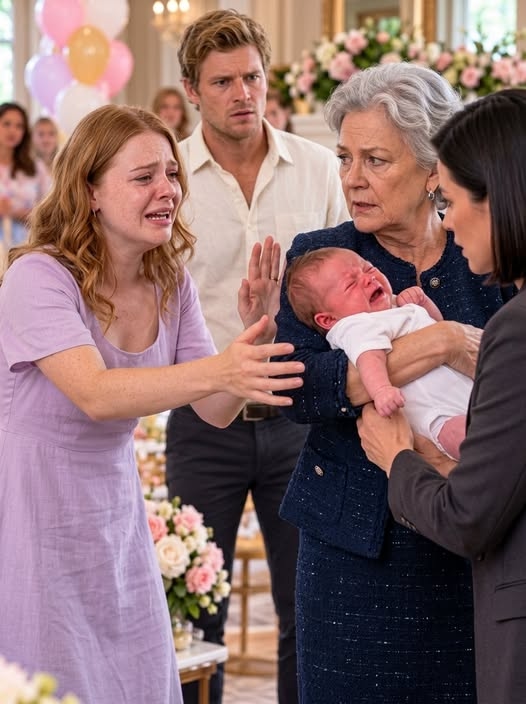
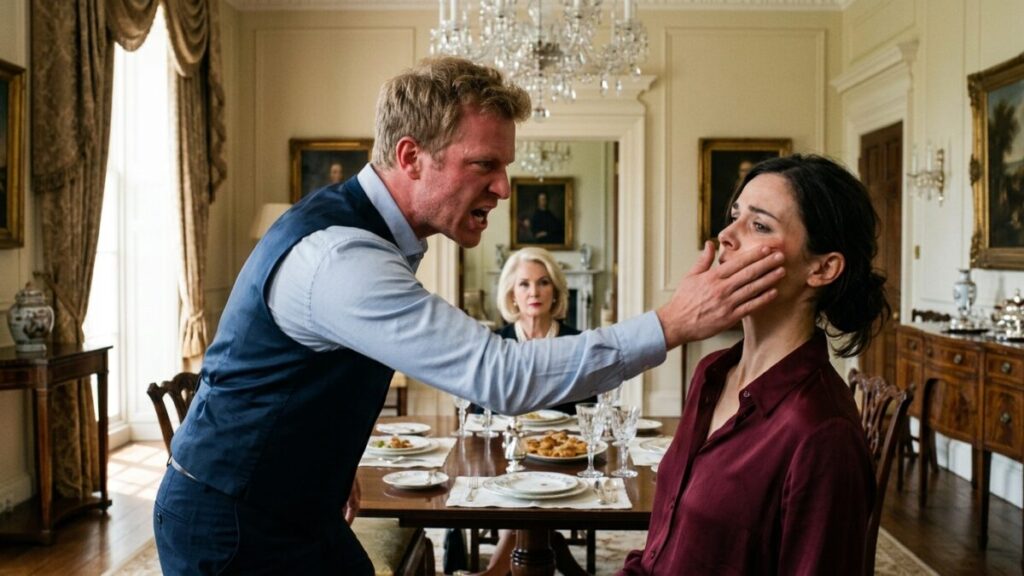
“Did Aaron tell you it was false?”
Her tiny hesitation gave away more than she intended.
“Whatever Aaron has or has not done,” she said, “you do not handle family matters this way.”
“I handled them privately for months.”
“You should have come to me.”
“Why?”
“Because I am his mother.”
“Exactly.”
“You are emotional right now.”
Half my wardrobe was boxed, my jewelry packed in a travel case, and my passport lay beside my purse. Surveying it all, I discovered a calm I hadn’t possessed earlier.
“No,” I replied. “I was emotional six months ago. Right now I’m organized.”
“Claire, do you understand what divorce from Aaron will mean?”
I wondered what Margaret expected me to fear: losing the house, the Prescott name, her dinners, charity board seats, the careful place settings and photographs in Boston society magazines. Perhaps she mistook access to their riches for riches of my own.
“Yes,” I said.
“I understand.”
“I don’t think you do.”
It might as well have been the Prescott family slogan. I smiled despite myself.
“You’re probably right.”
“Come to dinner tomorrow. We can talk like adults.”
“No.”
“Claire.”
“Good night, Margaret.”
I ended the conversation. By ten, my parents were there. My father embraced me in silence; Mom surveyed the cartons, removed her coat, and asked, “Which closet?” I indicated the closet, and she began working without an interrogation or a lecture. An hour later, Dad carried out the final box. Mom discovered me studying the hollow on Aaron’s side of our bed.
“You can change your mind,” my mother said softly.
“About the divorce?”
“About anything.”
“You can leave tonight and still decide later that you want to try again. Or you can leave tonight and never come back. Leaving the house doesn’t trap you into one future.”
Tears filled my eyes again.
“I don’t think I want to come back.”
“Then don’t.”
I remembered returning from our honeymoon three years earlier, Aaron wrapping his arms around me in that room and saying the house finally felt like home. When had I stopped belonging to it? Perhaps emptiness began when people ceased to see each other, long before anyone moved out. I switched off the bedroom light, descended the stairs, and glanced one last time at the long marble foyer I’d decorated to suit his taste. This time, I didn’t care whether he’d approve of what I chose.
Chapter 3: DISCLOSURE
The following day I settled into my place in Marblehead. Calling it a house hardly did it justice: weathered cedar and wide windows stood on a rise overlooking the sea, with a slim footpath winding down toward the stones at the shoreline. Dad had signed it over to me two years before my wedding because he and Mom rarely used it. Aaron had come exactly twice. He’d complained about the drive on his first visit, then spent the second taking three business calls out on the deck. Afterward he’d always found an excuse to stay away. His absence had once saddened me; now I welcomed rooms untouched by memories of him. There were no suits, no lingering expensive cologne, no phone charging beside the bed. Even the quiet was mine.
Nathan phoned at nine the next morning.
“They’ve responded.”
“That was fast.”
“Your husband has expensive attorneys.”
“So do I, apparently.”
“You do.”
I heard documents rustling at his end.
“They want the Slack post removed.”
“No.”
“Expected that.”
“They want a written clarification saying your statement was made during a private marital disagreement and should not be interpreted as a factual allegation concerning any Prescott Global employee.”
“No.”
“I also expected that.”
I managed a small smile.
“What else?”
“They’re objecting to the proposed timeline and requesting full financial disclosure.”
“Of course they are.”
“They’re also suggesting you may be seeking to renegotiate the prenup under emotional pressure created by Aaron’s alleged misconduct.”
“I’m not.”
“I know.”
“I want the prenup enforced.”
“I know that too.”
“Then why are they doing this?”
“Because they don’t understand you yet.”
His answer stayed with me. I hadn’t treated my background as confidential. Aaron knew I’d studied law, came from a financially comfortable family, had an investing grandfather and a father who oversaw family holdings, and maintained accounts of my own. But he never pursued any of it. In his mind, “comfortable” was necessarily less than the Prescott fortune and “family investments” could only mean conventional portfolios. Marblehead seemed to him my greatest asset because it was the only one he’d noticed.
Our prenup negotiations had focused largely on protecting his Prescott Global shares, family trusts, future payments, executive earnings, and properties. My independent attorney protected my premarital holdings, and I waived claims against the Prescott estate. The proceedings were courteous and clinical. Once their side understood my assets would remain separate, nobody bothered to ask what those assets contained. Aaron signed, and we married. He preferred paying household expenses, and I had seen no reason to argue about restaurant bills or the mortgage. I hadn’t been financially dependent; convenience had simply allowed him to imagine that I was.
Two days later, a gossip website displayed a leaked screenshot beneath the headline:
PRESCOTT GLOBAL CEO’S WIFE ANNOUNCES SPLIT IN COMPANY SLACK.
I closed the page after twenty seconds. Nathan had anticipated the publicity.
“There’s a good chance this becomes public.”
“It already is.”
“More public.”
“What should I do?”
“Nothing.”
Doing nothing was harder than it sounded. Prescott Global issued an impeccably sterile statement declining to discuss executives’ personal affairs and emphasizing normal operations. It named neither Jasmine nor, in any meaningful way, Aaron. That evening an unfamiliar number rang. I answered before recognizing his voice.
“Claire.”
I considered disconnecting but answered instead.
“This number isn’t blocked yet.”
“I need five minutes.”
“You have attorneys.”
“So do you.”
“Then use them.”
“This isn’t about the divorce.”
“It’s all about the divorce now.”
“Claire, the press is calling people.”
“Then don’t answer.”
“You think this is funny?”
“No.”
Popular Posts
→- 1
- 2
- 3
- 4




Recently Viewed
Stories you read recently will appear here.