The short version is this.
She believed the lake house was theirs by inevitability.
She believed my relationship to Daniel gave her access to assets she had already decided she deserved.
She believed grief makes older men pliable.
She believed old men with no children at home eventually become financial instruments for their children, whether anyone says it out loud or not.
Then she said Daniel had known about the home equity line.
That he had signed paperwork.
That the money had paid for things they both enjoyed.
That she would not stand alone in front of this problem.
Daniel had gone the color of old chalk.
He stood.
“Vanessa.”
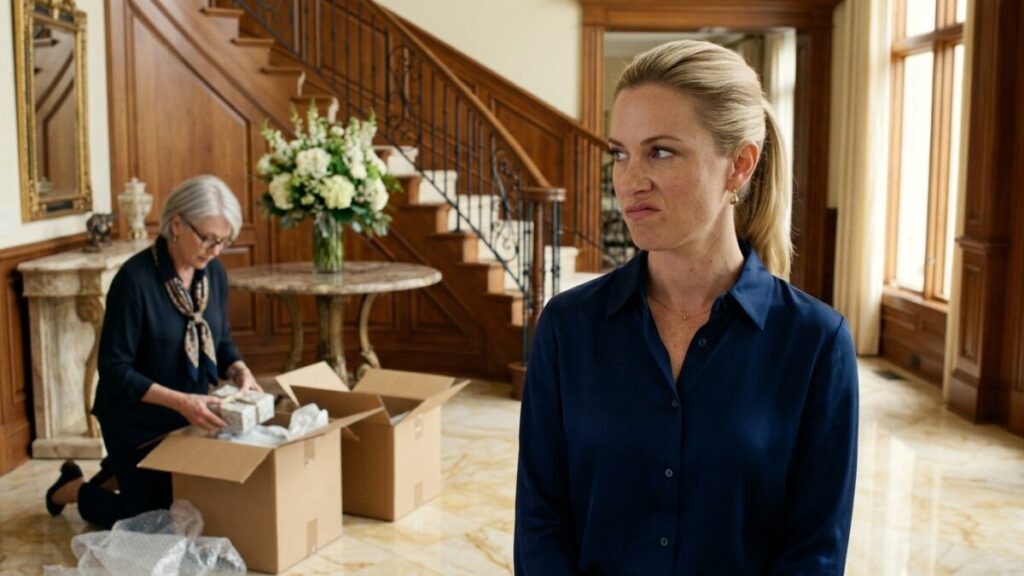
She turned on him.
“You don’t get to act surprised now.”
“I didn’t know about the forged documents.”
“You knew enough.”
“That is not the same thing.”
She laughed, but there was panic in it.
“No. You don’t get to hide behind your sad father act. You wanted the money. You wanted out from under this family’s dead lake house and dead woman legacy. You just didn’t want to say it in front of him.”
Something in my son’s face collapsed.
He said her name again.
This time, not as a question.
As grief.
She said she was done with this family, this property, this shrine, this old wood museum built around a woman nobody could compete with.
Then she walked across the lawn and into the house.
The screen door slammed behind her.
The remaining guests left soon after.
Margaret came and sat beside me on the bench where Daniel had been.
For a while, she said nothing.
That was one of the things I appreciated about her most.
Some people rush to fill silence because they are uncomfortable with truth settling into a room.
Margaret let truth settle.
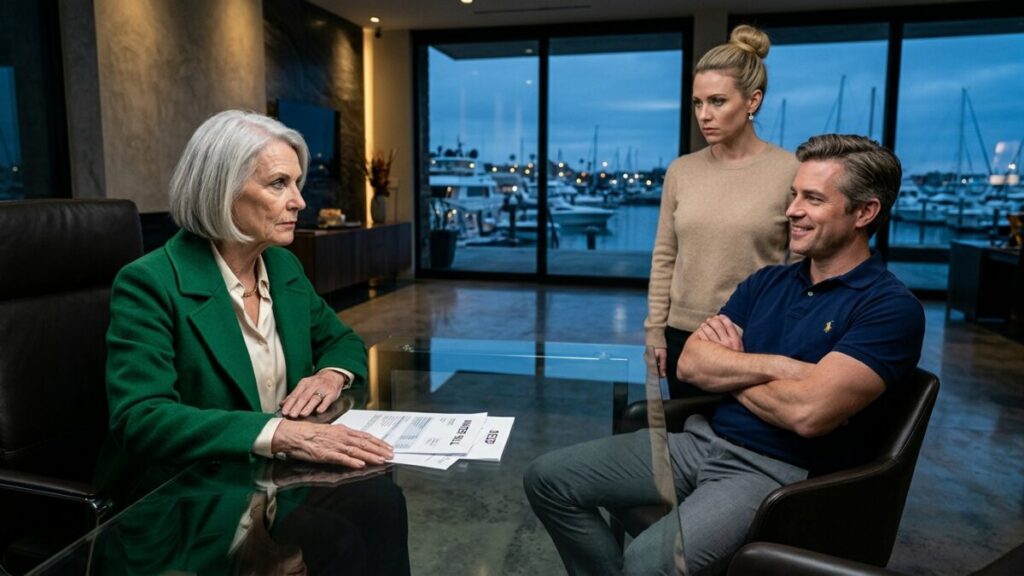
Then she said, “The criminal referral will be filed Monday. The injunction is solid. The Hartwell LLC will likely be dissolved through court action within ninety days. The broker has already been notified, and the listing is being removed.”
I looked toward the house.
“What about Daniel?”
“That depends on how cooperative he is and how much of the financial trail is in his name versus hers.”
“Is it clean?”
“No,” she said. “It rarely is.”
“I understand.”
“Change the locks tonight,” she said. “Document every room before anyone removes anything. Photograph the dock, the shed, the boathouse, the kitchen drawers, the upstairs rooms, everything.”
“I’ll do it.”
She stood.
Then she looked toward the willow.
“Carol protected this place well.”
“She always saw further than I did.”
Margaret gave me a small smile.
“Yes. She did.”
After everyone left, I sat alone on the dock until the sun disappeared.
The lake went from copper to gray to that deep blue it turns on clear summer nights, a blue that belongs only to that hour and that water.
Daniel found me around nine.
He sat beside me with his feet hanging over the edge, the way he used to when he was a boy.
For a long time, neither of us spoke.
When he finally did, he did not begin with excuses.
That mattered.
“I knew about the home equity line,” he said.
I kept looking at the water.
“I told myself it was legal because Vanessa said the attorney thought the trust language was ambiguous. I told myself that as your son, I had implied authority. I wanted to believe it because believing it made things easier.”
“That was a choice.”
“I know.”
“Did you know about the forged instruments?”
He was quiet.
Not the constructing kind of quiet.
The honest kind.
“No. I signed documents I didn’t read carefully enough because Vanessa told me they were standard transfer papers. I trusted her. But trusting her instead of looking was also a choice.”
“Yes.”
His shoulders curved forward.
“I know.”
I asked the question I had been carrying all evening.
“Were you part of the plan to move me to Florida?”
“Yes.”
The answer hurt, even though I had known it.
“I told myself it was for your benefit,” he said. “And maybe part of me believed that. But it was also convenient. It got you away from the property. It made the sale easier. I know that.”
I closed my eyes.
The water moved softly below us.
“I do not hate you,” I said.
His breath caught.
“But I am not prepared to discuss the future of our relationship tonight. I don’t know when I will be.”
“I understand.”
“What you did is not unforgivable in the way people use that word when they are finished. But it will require more than apology. It will require evidence over time.”
He nodded.
“I’m sorry.”
He said it the way people say it when they mean it.
That does not make it enough.
He left that night. I did not ask where he went.
I slept in the upstairs bedroom with the window open.
The same room where Carol died.
In the morning, I changed the locks.
Over the next weeks, Margaret’s office worked with the kind of efficiency that looks almost boring from the outside and devastating from the inside.
The brokerage firm terminated the listing immediately after reviewing the trust and audit documents. They later filed their own complaint regarding fraudulent representations made during the listing process.
The Hartwell LLC was found to have obscured approximately $340,000 in transactions over eighteen months, most of it flowing through accounts Vanessa had opened using the lake house as a stated asset.
Her attorney sent strongly worded letters.
Margaret responded with documents.
There is a lesson in that.
Strong language feels powerful until it meets clean paperwork.
Daniel cooperated with the investigation.
That was significant.
It did not erase what he had done.
But it mattered.
It mattered to Margaret. It mattered to the investigators. It mattered, though I did not want it to, to me.
Vanessa eventually moved out of their Scottsdale condo. She and Daniel separated. The legal process between them unfolded far away from me, which was where I preferred it.
Popular Posts
→- 1
- 2
- 3
- 4




Recently Viewed
Stories you read recently will appear here.