Nobody spoke.
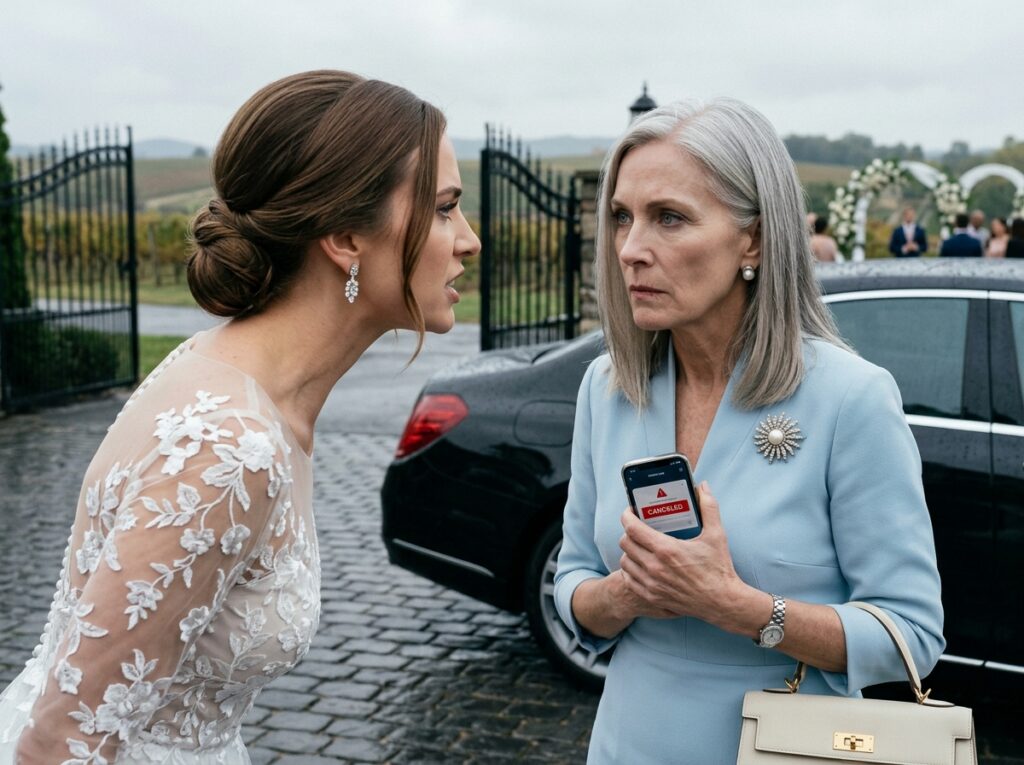
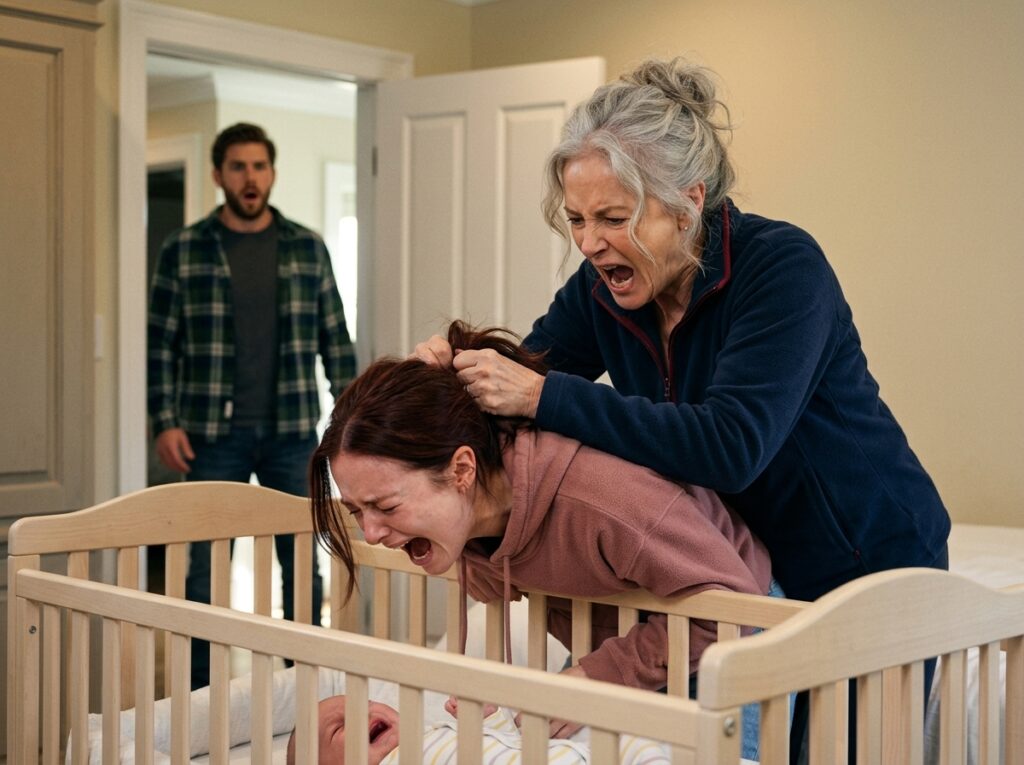
The officer escorted Miranda toward the patrol car.
She did not go quietly.
Not anymore.
At the porch, she turned.
She pointed at me.
“This is your fault.”
I flinched.
Grandpa moved in front of me.
The officer immediately told Miranda:
“Keep walking.”
But the words had already landed.
This is your fault.
Those four words followed me for years.
Not because I believed them forever.
Because part of me had believed them long before she said them aloud.
Dad came toward me.
I stepped backward.
He stopped.
Pain crossed his face.
Good.
I don’t mean I wanted to hurt him.
I mean he needed to understand that being my father did not automatically make his touch safe after months of not noticing what was happening inside his own house.
“Can I hug you?”
he asked.
That question saved something.
Not everything.
Something.
I nodded.
Dad hugged me carefully.
The moment his arms closed around me, I broke.
“I’m sorry.”
he whispered.
I cried against his work jacket.
“I’m sorry.”
Again.
“I’m sorry.”
Again.
No excuses.
Not yet.
Just sorry.
Grandpa stood beside us.
The second officer waited.
Eventually Dad pulled away.
“Why didn’t you tell me?”
Grandpa said sharply:
“Daniel.”
Dad closed his eyes.
“Wrong question.”
“Yes.”
Dad nodded.
Then he looked at me.
“I’m sorry.”
He tried again.
“What made you feel like you couldn’t tell me?”
That was different.
I stared at him.
“You were never home.”
The truth hurt him.
He let it.
“I know.”
“She said you’d think I hated her.”
Dad cried.
“I wouldn’t.”
“She said you’d send me away.”
“I never would.”
“She said you were finally happy.”
That one destroyed him.
I watched my father physically fold.
His hands went to his knees.
He stared at the gravel.
“She said if I told you, I’d ruin your marriage.”
Dad whispered:
“Oh, sweetheart.”
I started crying again.
“I didn’t want you to be alone.”
He looked at me.
And for the first time, I saw my father understand the terrible bargain I had been trying to make.
My body for his happiness.
My silence for his marriage.
My fear for his peace.
He shook his head.
“No.”
His voice broke.
“You were never supposed to pay for my happiness.”
I cried.
Grandpa looked away.
Even the officer did.
Dad came closer but did not touch me.
“You hear me?”
I nodded.
“No.”
he said.
“Say it.”
“I wasn’t supposed to pay for your happiness.”
“Again.”
“I wasn’t supposed to pay for your happiness.”
He cried.
“Never.”
That became one of the sentences I carried for the rest of my life.
The police took statements.
Then more statements.
Child protective services became involved.
The words frightened me at first.
Miranda had spent months telling me that if anyone found out, “the state” would put me in foster care.
That was not what happened.
A caseworker named Angela Ruiz came to Grandpa’s house.
She wore flat shoes and carried a purple folder.
She did not talk to me like a baby.
She did not talk to me like a criminal.
She asked whether I felt safe with Grandpa.
“Yes.”
Whether I wanted Dad there.
I hesitated.
Dad saw it.
“I can leave the room.”
he said.
I nodded.
He left.
That mattered too.
Angela asked questions.
Not all at once.
Not all that day.
The investigation did not become a dramatic television montage where everyone immediately understood everything.
It was slow.
Painfully slow.
Doctors.
Photographs.
Interviews.
School records.
Neighbors.
Phone records.
Miranda’s employment records.
My father’s schedule.
The security recordings.
And then something none of us expected.
The school nurse had records.
Seven visits in four months.
Headache.
Stomach pain.
Shoulder pain.
“Fell down stairs.”
“Bike accident.”
“Ran into door.”
I had become creative.
Or so I thought.
The nurse had written a note after the fifth visit:
Student appears unusually anxious when discussing home. Recommend counselor follow-up.
The follow-up never happened.
Not because nobody cared.
Because paperwork got lost between departments.
That became hard for me later.
There had been clues.
So many clues.
But clues are not always conclusions.
My teachers saw a quiet girl.
My father saw a teenager becoming private.
The nurse saw accidents.
The neighbor heard occasional shouting.
Grandpa saw me mostly on weekends, usually in sweaters.
Miranda depended on everyone seeing only one piece.
Abuse survives in fragments.
Grandpa was the first person who accidentally saw enough pieces at once.
The bruises.
My face.
My fear when Miranda came upstairs.
Then he believed me.
Immediately.
That was the difference.
Dad moved into Grandpa’s house too.
I did not like that at first.
Grandpa asked me before allowing it.
“Do you want your father here?”
I didn’t know.
So Grandpa said:
“Then he can stay at a motel tonight.”
Dad stayed at a motel.
That sounds small.
It was enormous.
My father owned the house where I had been hurt.
He was Grandpa’s son.
And still, my uncertainty mattered.
Three nights later, I asked:
“Can Dad come here?”
Grandpa looked at me.
“You sure?”
“Yes.”
“Okay.”
Dad moved into the spare bedroom.
He did not ask when we were going home.
He knew.
I was not going back there.
Not then.
Maybe never.
He returned once with police supervision to collect clothes, documents, photographs, my mother’s jewelry, and my cat, Pepper.
When he brought Pepper into Grandpa’s house, I screamed.
Not from fear.
Joy.
I had thought Miranda would keep her.
Pepper ran straight toward me, furious about the entire experience.
I held her against my chest.
Dad cried.
Grandpa said:
“That cat has always hated me.”
Pepper hissed at him.
“See?”
For the first time in weeks, I laughed until my ribs hurt.
Then I stopped because my ribs actually hurt.
Healing is inconvenient that way.
Miranda was placed on administrative leave from the hospital where she worked.
Not because an accusation automatically proved guilt.
Because the nature of the allegations required review.
She hired an attorney.
Popular Posts
→- 1
- 2
- 3
- 4




Recently Viewed
Stories you read recently will appear here.