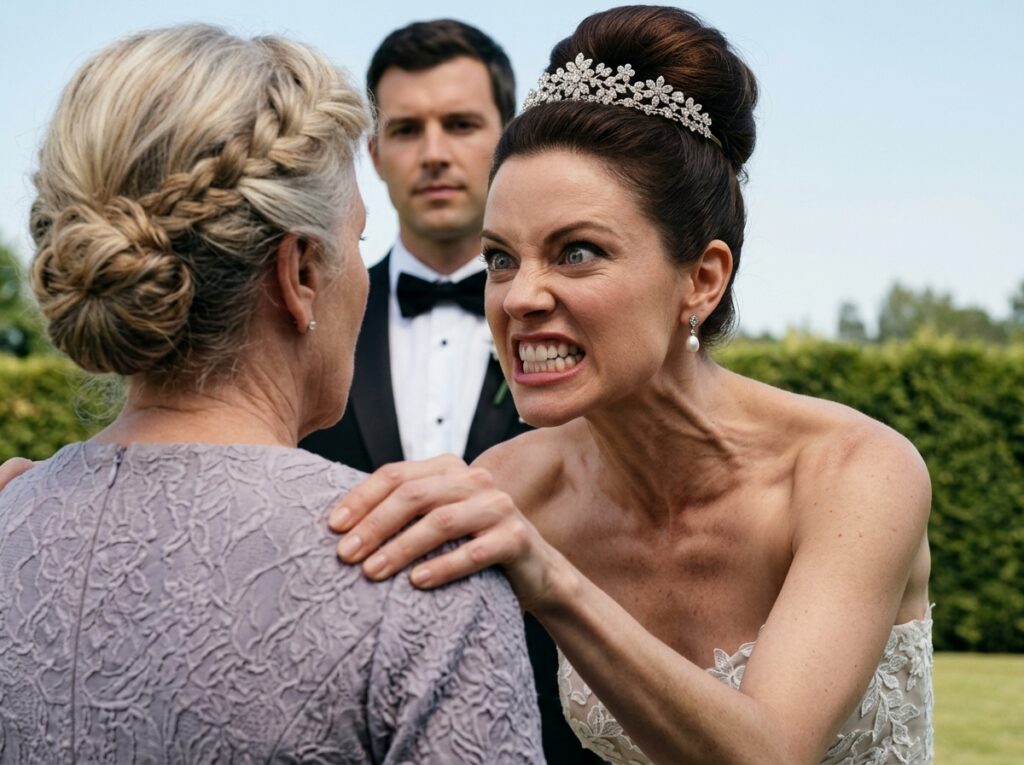
At Briarwood Estate, where white columns and a lake behind the ceremony arch made two hundred guests look as though they had stepped from a magazine, my wife Margaret was already being treated like something to be moved aside while our son stood close enough to see, far enough to remain silent.
Daniel smiled.
The venue outside Charleston had manicured lawns, white-draped tables, string lights, soft jazz, and champagne moving through the evening as if money could polish every rough edge from a family. Margaret sat in the front row with tears in her eyes and a folded handkerchief in both hands.
For months, she had tried to love Vanessa.
She helped choose flowers. She addressed invitations by hand at our kitchen table in her careful script. She gave Vanessa the pearl bracelet her own mother had worn on her wedding day, offering it with the tenderness of a woman surrendering something that could never be replaced.
Vanessa accepted it with a smile, then later said loud enough for Margaret to hear that it was “vintage,” and perhaps suitable for the rehearsal, not the wedding.
Margaret said nothing.
That was her way.
The ceremony ended beautifully, or appeared to. The vows were spoken, the kiss came, guests applauded, and everyone began moving toward the garden reception with the satisfied ease of people who believe they have witnessed something proper.
Then the lawn gave us the truth.
Near the edge of the grass, softened by rain from the night before, Margaret walked carefully with her cane while Vanessa came behind her with two bridesmaids at her side. I saw Vanessa lean close, saw Margaret turn in confusion, and then saw both of Vanessa’s hands go to my wife’s shoulders.
Margaret fell sideways into the mud.
Her pale blue dress was ruined. Her handkerchief landed in a puddle. Her cane rolled away, and for one terrible second, two hundred people became perfectly still.
Then Vanessa laughed.
Daniel stepped toward them, and I waited for my son to help his mother. Instead, he put his arm around Vanessa’s waist, leaned to her ear, and whispered something that made her laugh harder.
A cold understanding arrived.
I crossed the lawn, picked up Margaret’s cane, helped her stand, and placed my jacket over her shoulders while her hands trembled against the fabric.
“Thomas,” she whispered. “Don’t.”
But I was already walking toward the microphone near the bandstand.
When I tapped it once, the sound cracked across the garden. Richard Caldwell set down his champagne. The band stopped. I looked at my son, his bride, and the guests who had watched my wife fall without moving.
“Ladies and gentlemen,” I said, “before the first dance, I believe everyone here deserves to understand why this wedding will not be paid for by the Whitmore family.”
I spoke of the flower budget, of Vanessa telling Margaret we should not have offered to host if we were going to act poor, and I held up the envelope containing the cashier’s check for the remaining balance.
Eighty-four thousand dollars.
“This was meant to go to the venue manager after dinner,” I said. “It will not.”
Vanessa’s face changed. “You can’t do that.”
“I can,” I replied. “And I have.”
Daniel’s voice dropped. “Dad. You’re embarrassing us.”
I looked at my son then, really looked at him, and for one narrow moment I could still see the boy who once carried injured birds into our garage and stood over them with tears on his cheeks, begging me to make the world gentler than it was.
That boy was buried deep.
He stood before me in a tailored tuxedo, his hand still close to the woman who had shoved his mother into the mud, and all the polish in the world could not hide the smallness of what he had chosen.
“No,” I said. “You did that when you chose laughter over your mother.”
The Microphone
The words did not rise. They settled.
Across the garden, the guests remained arranged in their expensive silence, champagne flutes suspended near mouths, linen napkins resting untouched beside plated salads, the string lights trembling above us like a decoration that had learned too late what it had been hired to illuminate.
Vanessa recovered first.
Some people mistake public attention for authority, and she had that talent; she lifted her chin, turned sharply toward Elaine Porter near the tent, and spoke as though the room belonged to her because she had practiced possessing rooms all her life.
“This is a private family matter,” Vanessa said. “Continue the reception.”
Elaine did not move.
She was a careful woman in a black suit, hair pinned low, hands clasped at her waist with the professional composure of someone who had spent years preventing wealthy families from revealing themselves too plainly before dessert.
“Mrs. Whitmore has been injured on the grounds,” Elaine said quietly. “I think we should pause service until we understand what is happening.”
Vanessa’s head snapped toward her.
“Mrs. Whitmore?” she repeated, her voice going bright and brittle. “That’s me now.”
From the edge of the lawn came my wife’s voice.
“No.”
The Name
It was the first word Margaret had spoken loudly enough for all of them to hear, and it traveled farther than my speech had, because no one expected a woman covered in mud to possess anything left that could command a garden.
Every head turned.
Margaret stood with my jacket hanging loosely from her shoulders, her silver hair loosened on one side, her pale blue dress stained from shoulder to knee in dark, wet earth. Her cane was in her left hand, but she did not lean on it then.
She looked injured.
She did not look defeated.
“You are not me,” she said.
Vanessa blinked, and what crossed her face was not remorse, not even alarm, but offense, as though my wife had taken from her a title she had already planned to wear like jewelry.
Daniel took two steps toward his mother.
Popular Posts
→- 1
- 2
- 3
- 4




Recently Viewed
Stories you read recently will appear here.





