One thing about being a parent is hoping that your children would appreciate at least half the effort you put in raising them. It’s not like we ask from them to take care of us and be around us at all times, but at least show some basic respect.
For many of us, that doesn’t happen, and we question what we did wrong along the way.
Some eight months ago, my son David entered the kitchen and said something along the lines of, “Mom, Sarah feels like you’ve become too much of a burden, and somehow… I agree.”
It really came out of the blue, and his words hurt me to the core. He was well aware of that, and he probably expected me to start crying, but I kept my cool and just said, “Well, good to know.”
He was taken aback by my reaction, not knowing I was barely managing not to burst into tears.
You see, he and Sarah moved in with me some months ago because their rent was too high and they struggled to make ends meet. My husband passed away, my house had plenty of rooms, so when they asked if they could move in, I said yes in a heartbeat.
In the beginning, I didn’t object. I cleaned out the guest bedrooms, adjusted my schedule, and tried to be accommodating. But gradually, “temporary” became permanent. Sarah started moving my kitchen items around because my things were “old-fashioned.” David suggested we order fancy takeout, but always left the bills for me. The garage was theirs, while my car sat outside in the driveway. I was cooking for them, doing their laundry, and buying their groceries. Without even realizing it, I had turned into an unpaid housemaid, cleaning the house Arthur and I bought after decades of hard work.
And now, David calls me a burden. That evening, something snapped inside me.
The next day, I woke up at six, as I always did. But instead of brewing Sarah’s costly coffee, preparing breakfast, and sorting their laundry, I made my own tea and sat outside with a book.
At eight, Sarah walked into the kitchen. “There’s no coffee.”
“The beans are in the pantry,” I replied.
She stared at me. “Why?”
“I’m having tea today.”
She returned ten minutes later with a basket full of clothes. “I can’t find my silk blouse. Isn’t it cleaned?”
“Did my laundry yesterday.”
She got so confused. “And ours?”
“No.”
“You’re really going to do this just because David said a few things?”
I closed my book. “You’re thirty years old, Sarah. I think you know how to use a washer.” Then I walked away.
That afternoon, while sorting through the mail, I found a thick, glossy brochure: Sunset Pines — Independent & Assisted Living for Your Golden Years.
Everything fell into place. “Burden” wasn’t an accidental word; it was the strategy. I’m sixty-four, I work out, I drive, and I volunteer. I didn’t need assisted living. But they needed a four-bedroom home in a good neighborhood, and they already had one in mind. If they could convince me I couldn’t cope on my own, they could ease me out and take over
I headed straight to the bank that afternoon. Years ago, right after Arthur passed away, I added David’s name to my checking account just in case. I asked the teller to set up a new account in my name only and close the old one. It felt strange to walk out of there, but a wave of relief washed over me. I then bought some groceries for myself, some salmon, fresh veggies, and a bottle of wine.
Later that evening, David walked into the kitchen and yelled, “Mom, where’s my meal prep?”
“I’m only cooking for myself now.”
Dead silence fell over the kitchen. From that moment on, I did nothing for them. I stopped doing their laundry, stopped buying their groceries, and when David yelled that the Wi-Fi wasn’t working, I replied that I had changed the password.
He stared at me, his mouth dropping open. “We live here, too!”
“Then you can pay for your own internet.”
He stared at me like I had lost my mind, then started complaining about my behavior as if I were being a cruel, stingy landlord.
I looked him dead in the eye. “A landlord collects rent. You haven’t paid a dime in eight months.”
But that wasn’t all. I had already contacted a realtor to value the property.
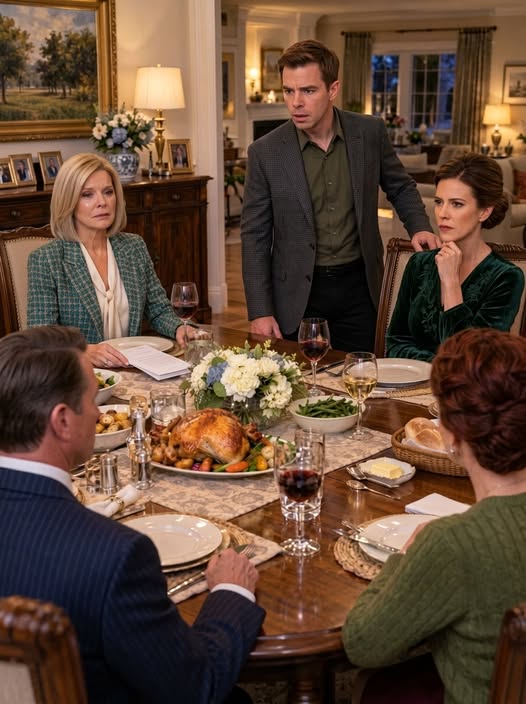
And then the day arrived. It was Sunday. Sarah’s parents showed up for dinner. Midway through the meal, David said, “Mom, we’ve been discussing your future.”
I had to bite the inside of my cheek to keep from laughing out loud.
“You’re getting too old to manage a big house like this,” Sarah chimed in, pretending to be concerned for me.
“And we found this amazing place called Sunset Pines. Independent and assisted living,” David continued, warming up to his speech. “They have activities, full-time care… it’s perfect.”
“Yes,” Sarah added eagerly, “and that way, David and I can stay here, keep up the maintenance, and look after the property for you.”
I placed my wine glass carefully on the table. “A win-win?”
“Exactly,” David smiled, thinking he had won.
I dug into my cardigan pocket and slid a folded piece of paper across the table. “You know what? I actually agree with you.”
David looked relieved and Sarah smiled, but that joy of theirs only lasted for a few seconds.
“Let’s agree that we shouldn’t live together anymore,” I continued. “I signed an agreement with a real estate agent on Friday. The house goes on the market next week.”
David gaped at me. “You’re selling the house?”
“Yes.”
Sarah dropped her fork and screamed, “You can’t do that!”
“The house is mine, Sarah.” I looked right at my son. “And I’ve already put a deposit on a downtown condo. It’s cozy, easy to keep clean, and has zero spare bedrooms. So you and Sarah have thirty days to find somewhere else to go.”
Popular Posts
→- 1
- 2
- 3
- 4




Recently Viewed
Stories you read recently will appear here.





