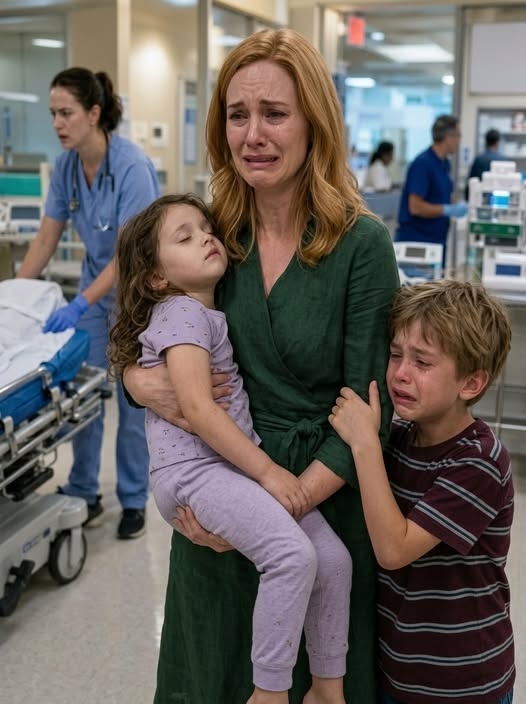
My Son Called From a Stranger’s Phone Saying His Sister Wouldn’t Wake Up—Then He Revealed Their Mother Had Warned Him Not to Call Me
PART 2
“Mommy told me not to call you.”
For a moment, the hospital around me seemed to fall silent.
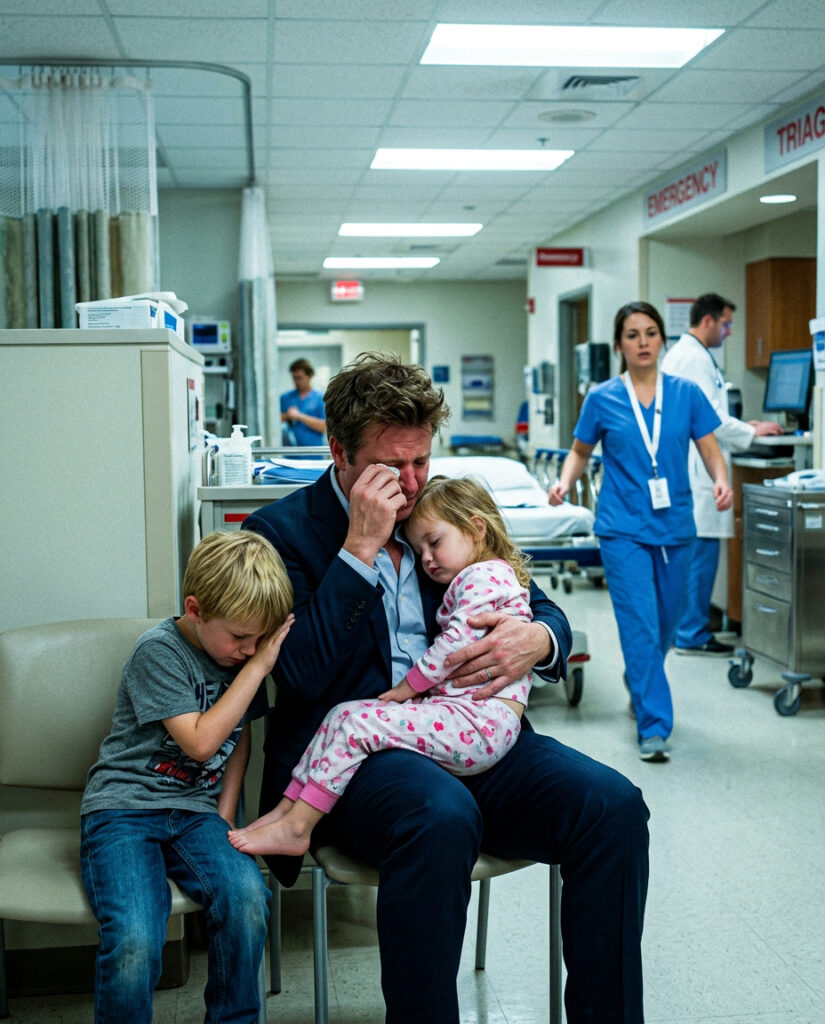
The squeak of shoes on polished floors, the murmur of nurses, the distant beeping from monitors—everything blurred behind the weight of my son’s words.
I crouched in front of Ethan, trying to keep my face calm even though my chest felt like it had split open.
“She said that?” I asked quietly.
Ethan nodded, his fingers twisting the hem of his stained shirt. His eyes were red from exhaustion, and there was a kind of careful fear in them no child should ever learn.
“When did she say it?”
He looked toward the hallway where the doctors had taken Emma.
“Before she left.”
I swallowed.
“What exactly did she say, buddy?”
Ethan’s lips trembled. “She said if I called you, you’d be mad. She said you were too busy and you didn’t want us anymore.”
I felt those words like a hand closing around my throat.
Too busy.
Didn’t want us anymore.
I had missed weekends because of work. I had answered emails during bedtime calls. I had rescheduled lunches when investors flew in unexpectedly. I had told myself every sacrifice was for them, for their future, for stability.
But to a six-year-old, love wasn’t measured in trust funds or college accounts.
It was measured in showing up.
And I hadn’t shown up enough.
Not the way he needed.
“Ethan,” I said, taking his small hands in mine, “listen to me carefully. I have always wanted you and Emma. Always. There has never been one second when I didn’t love you.”
His eyes searched mine as if he wanted to believe me but didn’t know whether he was allowed to.
“Then why did Mommy say that?”
I had no answer that wouldn’t break something else inside him.
So I pulled him against me and held him.
“She shouldn’t have said that,” I whispered. “And I’m sorry you had to carry it.”
His body shook once, then again, and then he cried into my shoulder with the helpless, exhausted sobs of a child who had been brave for too long.
I held him in the emergency room hallway while strangers passed around us.
I didn’t care who saw.
A doctor approached ten minutes later. He was a man in his fifties with tired eyes and a gentle voice.
“Mr. Whitaker?”
I stood, keeping one arm around Ethan.
“How is she?”
“Your daughter is dehydrated and has a high fever. She’s weak, but she’s responding. We’ve started fluids and medication. We’ll monitor her closely overnight.”
My knees nearly gave out from relief.
“She’ll be okay?”
“We’re cautiously optimistic. You got her here in time.”
In time.
The phrase haunted me.
What if Ethan hadn’t found a phone?
What if he had waited one more day because he believed his mother?
“What about him?” I asked, looking down at Ethan.
“We’ll examine him as well. He’s dehydrated and undernourished, but alert. We’ll get him food carefully. Nothing heavy at first.”
Ethan leaned against my leg, quiet now.
The doctor’s expression softened. “A hospital social worker will need to speak with you. Given the circumstances, we’re required to report this.”
“I understand.”
But understanding didn’t make it easier.
By the time Ethan had been checked over, cleaned up, and given crackers, soup, and a small carton of apple juice, his eyelids were drooping. A nurse brought him a blanket printed with cartoon rockets, and he curled up in a chair beside Emma’s hospital bed.
Emma looked impossibly small beneath the white sheets. An IV ran from her hand, secured with bright pink tape. Her cheeks were flushed, her curls damp against her forehead.
I sat between them, one hand on Ethan’s back and the other wrapped gently around Emma’s tiny fingers.
My phone had been vibrating nonstop.
Board members. My assistant. Unknown numbers. Missed calls from people whose emergencies suddenly felt like background noise.
Then one name appeared on the screen.
Sarah.
For a second, I just stared at it.
My ex-wife’s picture filled the phone: Sarah at the beach two summers ago, sunglasses on her head, Emma on her hip, Ethan holding her hand. She had been laughing when I took the photo.
I remembered thinking, even after the divorce, that she looked happy.
The phone kept vibrating.
I stepped into the hallway and answered.
“Where are you?” I said.
There was silence.
Then Sarah’s voice came through, thin and distant.
“Daniel?”
My fingers tightened around the phone.
“Where are you, Sarah?”
“I need to explain.”
“Explain?” I repeated, struggling to keep my voice low. “Our children were alone for three days. Emma is in the hospital. Ethan had to borrow a stranger’s phone because you left them with no food and told him not to call me.”
A sharp breath came from the other end.
“Emma’s in the hospital?”
“Yes.”
“Oh no,” she whispered.
Something in her tone confused me. It wasn’t annoyance. It wasn’t defensiveness.
It was fear.
Real fear.
“Where are you?” I asked again.
“I can’t come there.”
My jaw clenched. “That’s not an option.”
“Daniel, please. Just listen to me.”
“No, Sarah. You listen to me. I don’t know what’s going on, but you need to come to the hospital now.”
“I can’t,” she said, and her voice cracked. “Not yet.”
“Not yet?”
“I thought they’d be safe.”
I closed my eyes.
“They were starving.”
“I didn’t know it would be that long.”
“That long? Sarah, what does that even mean?”
Another silence.
Then she said, barely above a whisper, “I left a note.”
My eyes opened.
“What note?”
“At the house. In the kitchen drawer. The one by the sink.”
I looked back through the glass panel of Emma’s room. Ethan had fallen asleep, his head tilted awkwardly against the chair. Emma’s chest rose and fell beneath the blanket.
Popular Posts
→- 1
- 2
- 3
- 4




Recently Viewed
Stories you read recently will appear here.





