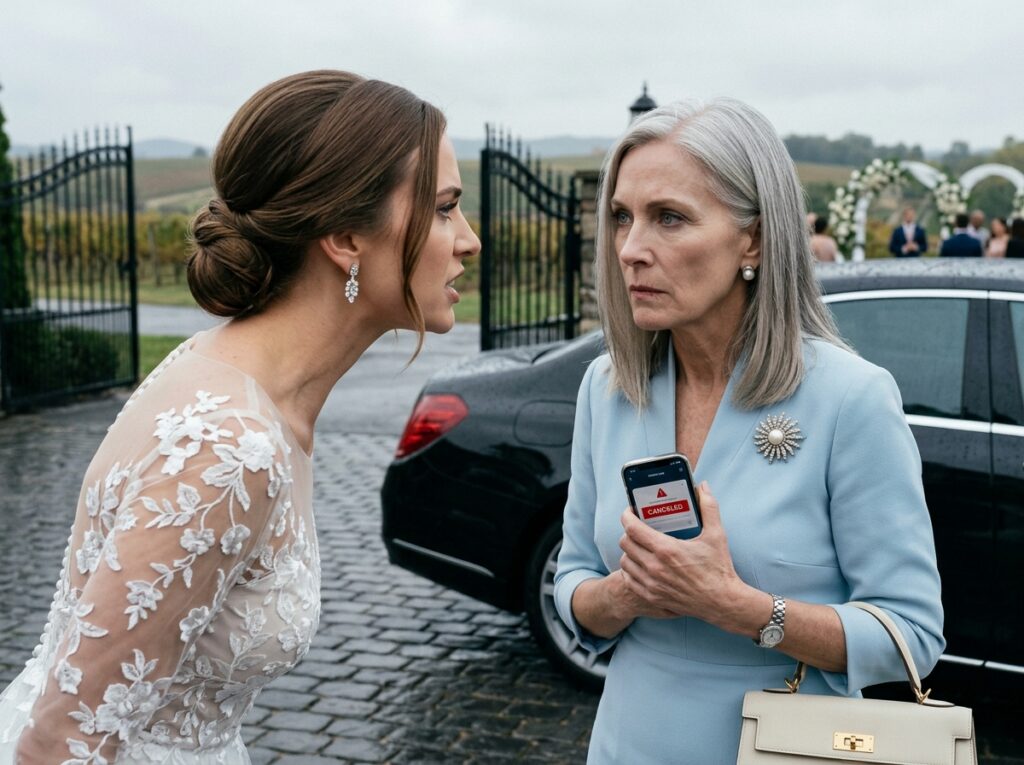
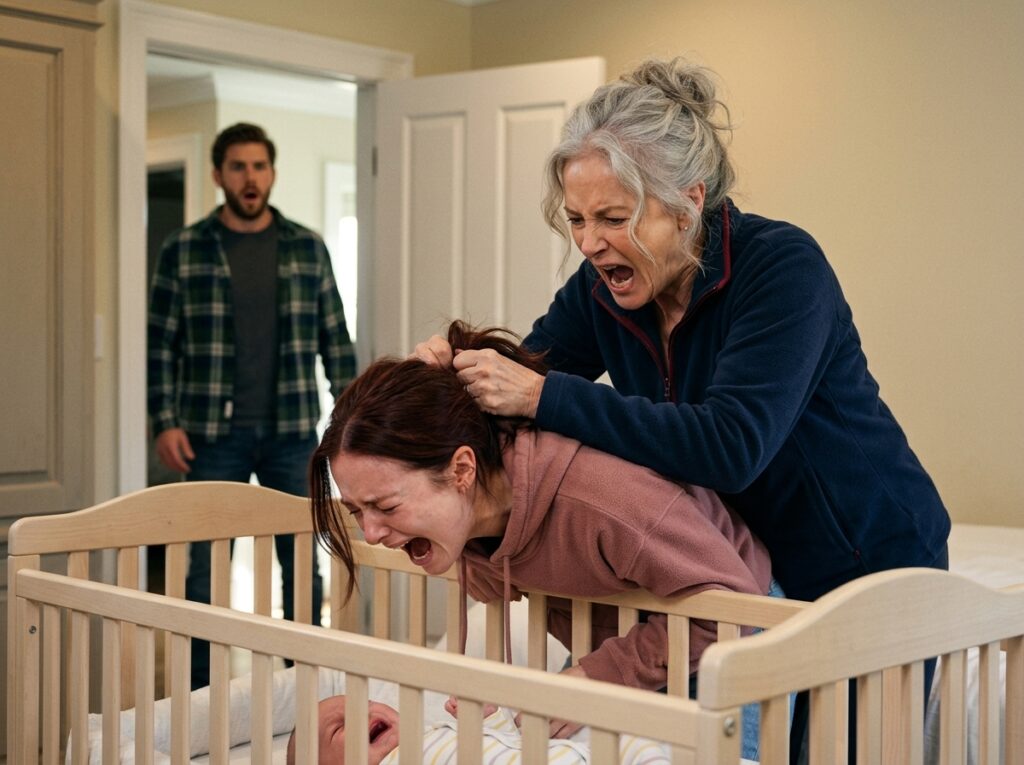
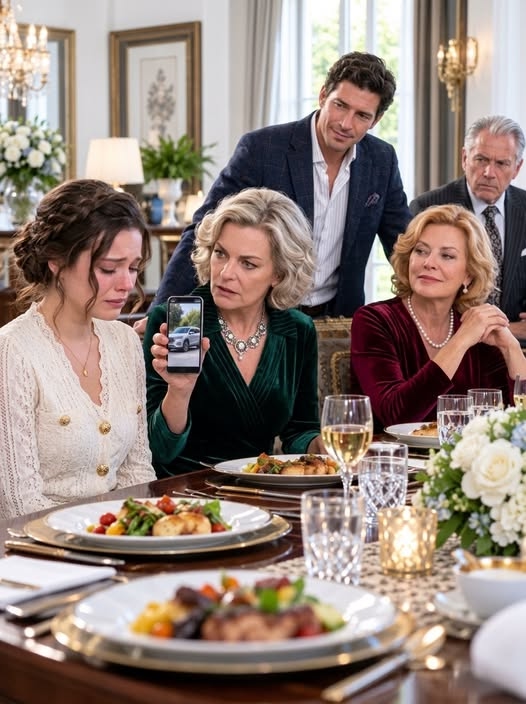
Then came the message that finally made my husband block her number.
“I still think you should get a DNA test.”
He stared at the screen for several seconds.
Then he laughed.
It wasn’t amusement.
It was disbelief.
He turned the phone toward me.
I read the message.
Something surprising happened.
I didn’t feel angry.
I felt tired.
“Do you want one?” I asked.
His expression changed instantly.
“A DNA test?”
I nodded.
“If you have any doubt—”
“No.”
He put the phone down.
“I don’t.”
“I wouldn’t blame you after everything she said.”
“I would blame myself.”
He moved closer.
“I was there when our son was born. I watched you go through fourteen hours of labor. I watched you hold my hand so hard I thought you’d break two fingers.”
Despite everything, I smiled.
“You complained about that?”
“I considered filing a report.”
I laughed.
It hurt my abdomen, but I laughed anyway.
Then his face became serious.
“I don’t need a test to defend myself against something my mother invented.”
That should have ended it.
But three weeks later, something arrived in our mailbox.
An envelope.
No return address.
Inside was a DNA testing kit.
My husband stared at it.
I stared at him.
Neither of us needed to ask who had sent it.
He walked directly outside and dropped it into the garbage bin.
Then he took a photograph of it.
I raised an eyebrow.
“Why the picture?”
“Documentation.”
That word became very important over the next few months.
We documented everything.
Every message.
Every email.
Every attempt to contact us through relatives.
Every time someone showed up at our house “just wanting to talk.”
Because my mother-in-law did not accept boundaries.
She treated them like challenges.
First, she sent my husband’s aunt.
Then his cousin.
Then one of her church friends.
They all delivered variations of the same message.
She’s devastated.
She made a mistake.
She’s still his mother.
She deserves to meet her grandson.
The last sentence always made my stomach turn.
Deserves.
As though access to my baby were a prize.
My husband gave everyone the same answer.
“My son’s safety is not negotiable.”
Some relatives understood.
Others didn’t.
We learned very quickly who believed peace was more important than accountability.
My own mother didn’t contact me for nearly a month.
Then a letter arrived.
Not a text.
Not a phone call.
A handwritten letter.
I almost threw it away.
Instead, I put it in a drawer.
Three days later, while the baby slept against my chest, I opened it.
My mother’s handwriting shook across four pages.
She didn’t make excuses.
That surprised me.
She wrote that she had replayed the hospital room in her mind hundreds of times.
She wrote that she kept seeing my face immediately after she slapped me.
She admitted something I hadn’t expected.
She said she had believed my mother-in-law so quickly because she cared more about avoiding public embarrassment than protecting her own daughter.
That sentence hurt.
But at least it was true.
She wrote:
“I cannot ask you to trust me because I proved that, in the moment you needed me most, I wasn’t trustworthy.”
I stopped reading.
I cried for a long time.
Then I finished the letter.
She didn’t ask to meet the baby.
She didn’t ask me to forgive her.
She simply said she was starting counseling and would wait until I decided whether I wanted contact.
That mattered.
Not enough to erase what happened.
But enough that I didn’t throw the letter away.
Six months passed.
Our son grew.
The faint stains disappeared from his skin within days.
But sometimes I still saw them.
Not literally.
In my memory.
I’d be changing his diaper and suddenly remember the black pigment around his ankle.
I’d hear him cry and be transported back to that hospital room.
My husband noticed.
One night, after putting the baby to sleep, he found me sitting alone in the nursery.
“You okay?”
I nodded automatically.
Then stopped.
“No.”
He sat beside me.
“I keep thinking about how helpless he was.”
My husband didn’t tell me to forget it.
He didn’t tell me everything was fine now.
He just listened.
“I was asleep,” I whispered. “I couldn’t protect him.”
“You were recovering from giving birth.”
“I know.”
“She waited until you couldn’t protect him.”
That realization changed something.
My mother-in-law hadn’t acted because I failed.
She acted because I was vulnerable.
There was a difference.
And I finally understood it.
Eventually, I agreed to meet my mother.
Alone.
No baby.
We met at a small café.
She looked older than she had six months earlier.
When she saw me, she stood.
She didn’t try to hug me.
“Thank you for coming.”
We sat.
For a few minutes, neither of us knew what to say.
Finally, she asked, “How are you?”
“Better.”
“And the baby?”
“Healthy.”
Her eyes filled with tears.
“I’m glad.”
She didn’t ask for pictures.
She didn’t ask when she could see him.
That mattered too.
I looked at her.
“Why did you hit me?”
She took a long breath.
“Because I believed the loudest person in the room.”
I hadn’t expected that answer.
She continued.
“Your mother-in-law sounded certain. Everyone reacted. I saw people looking at you, and instead of thinking like your mother, I reacted like part of a crowd.”
She wiped her eyes.
“I’ve spent months trying to understand how I could do that.”
“And?”
“I cared more about what I thought you had done to the family than about whether my daughter was safe.”
I looked down at my coffee.
“That’s hard to hear.”
“I know.”
“But I needed you to say it.”
She nodded.
“I know.”
We talked for almost two hours.
I didn’t forgive her that day.
Forgiveness wasn’t a switch.
Trust certainly wasn’t.
But I agreed to meet her again.
Two months later, she saw her grandson for the first time since the hospital.
My husband was there.
So was I.
Popular Posts
→- 1
- 2
- 3
- 4




Recently Viewed
Stories you read recently will appear here.