My Family Invited Me To Dinner After Three Years Then Tried To Stick Me With A $4,386 Bill
The Dinner at Bellmont House
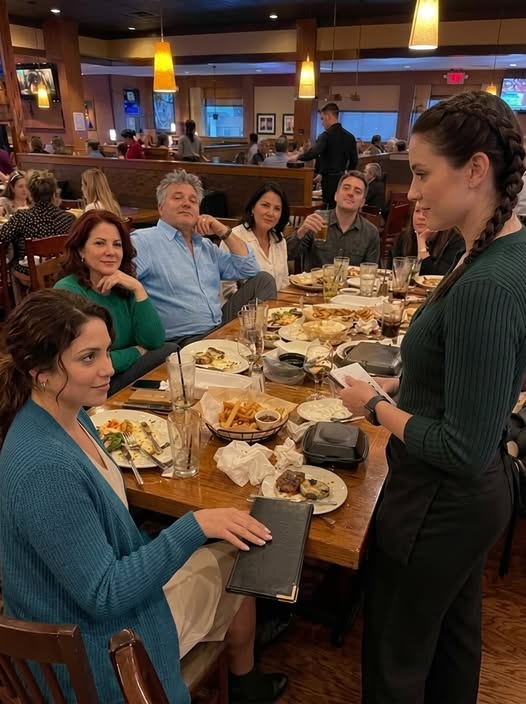
The waiter placed the black leather check presenter in the middle of the table with the kind of discrete grace that suggested he’d done this a thousand times before. Without hesitation, my father pushed it across the white tablecloth toward me, his movement casual, confident, like a man who already knew how this moment would play out and had already calculated every possible response I might give.
“You’ve got this, right, Elena?”
The room seemed to freeze. Sixteen pairs of eyes locked onto me. Not one person looked surprised. Not one person objected or shifted uncomfortably. My mother wore the same satisfied smile she always had when she believed she controlled the outcome, that peculiar expression of someone who’d already written the ending of a story that they assumed I would follow.
My brother Alejandro leaned back in his chair, swirling wine in his glass and grinning like he was enjoying the best moment of his week, like he’d been waiting for this specific second for months. My aunt suddenly found the melting ice in her drink fascinating, her eyes fixed on it with the intensity of someone pretending very hard not to be watching what was happening. My cousins lowered their phones and stopped taking photos of their food.
Everyone was watching. Waiting. Because this had never been a family dinner in any genuine sense. It had been a setup from the very beginning, a carefully orchestrated trap designed to corner me into compliance.
Bellmont House overlooked the Chicago River, glowing with golden lights and quiet luxury. The kind of restaurant where nobody discussed prices because everyone was expected to already know them, where the wealthy moved through the spaces with the casual confidence of people who’d never had to question whether they belonged.
Crystal glasses sparkled beneath chandeliers that cast soft, flattering light across every surface. Servers moved silently between tables, appearing precisely when needed and disappearing when not.
And scattered across ours were the remains of a feast I never ordered. Lobster shells. Oyster platters. Prime steaks that had been the size of small plates. Imported caviar that cost more per ounce than most people’s rent. Desserts covered in edible gold, the kind of excess that was meant to signal wealth and status.
For two straight hours, sixteen people had eaten like royalty. They’d ordered without consulting prices, without hesitation, without any apparent awareness that someone at the table would eventually have to pay for all of this indulgence. And now they expected me to pay for every bite, every sip, every moment of their enjoyment.
Three years earlier, I had cut ties with my family. Not because of an argument. Not because of something said in anger that could be taken back or apologized for. But because of betrayal so calculated, so deliberate, that no amount of time could make me forget it or pretend it hadn’t happened.
When my grandmother Sofia passed away at the age of ninety-three, she left me two things in her will: a small lakeside cottage in Wisconsin where she’d spent her summers for forty years, and an investment account she had spent decades carefully building. To everyone else in the family, it wasn’t a gift. It was an opportunity. It was a door left open to take something I apparently didn’t deserve.
My father called it unfair. I remember him using that word specifically, as though fairness was something that should be determined by family consensus rather than by a woman’s right to dispose of her own property as she saw fit.
My brother accused me of manipulating her somehow, though he never explained exactly how I’d managed to convince a woman in her nineties, a woman who’d always been sharp and clear-headed until her final days, to do anything against her will. My aunt claimed I was destroying family unity by not immediately handing over what was rightfully theirs, by not recognizing that individual property ownership was somehow less important than collective family need.
Then they arrived at my apartment carrying paperwork. I remember that day with perfect clarity. My father’s face, the way he’d already prepared his argument, rehearsed it probably multiple times before coming. The way he expected me to simply comply, the way he couldn’t comprehend that I might have my own thoughts about what I wanted to do with my grandmother’s gift.
“Just sign everything over,” he’d said, holding the papers like a judge presenting a verdict. “It’s better for the family.”
I refused. That single word changed everything.
Suddenly I was selfish. Ungrateful. Greedy. The kind of person who would steal from family. The kind of daughter who didn’t understand that family came first, that money didn’t matter, that what mattered was unity and sacrifice and putting other people’s needs before your own. Of course, they said all this while simultaneously trying to take the money for themselves, but that particular contradiction seemed to escape them entirely.
For three years I ignored their calls, messages, holidays, birthdays, and guilt-filled voicemails. My mother’s voice on the recordings grew sadder with each attempt, her tone becoming more wounded, as if I was the one causing her pain rather than the other way around. My father’s voice grew more insistent, taking on a harder edge as time went on. My brother’s took on a tone of wounded betrayal, as if I was the one who’d done something wrong to him, as if his hurt was somehow more legitimate than mine.
Not one apology ever included the words “We were wrong.” Not one message acknowledged that they’d crossed a line, that they’d tried to steal from me, that their actions had consequences. Instead, they acted as though my refusal to forgive them was the real crime, as though my silence was punishment they were inflicting rather than a boundary I was setting.
Popular Posts
→- 1
- 2
- 3
- 4




Recently Viewed
Stories you read recently will appear here.





