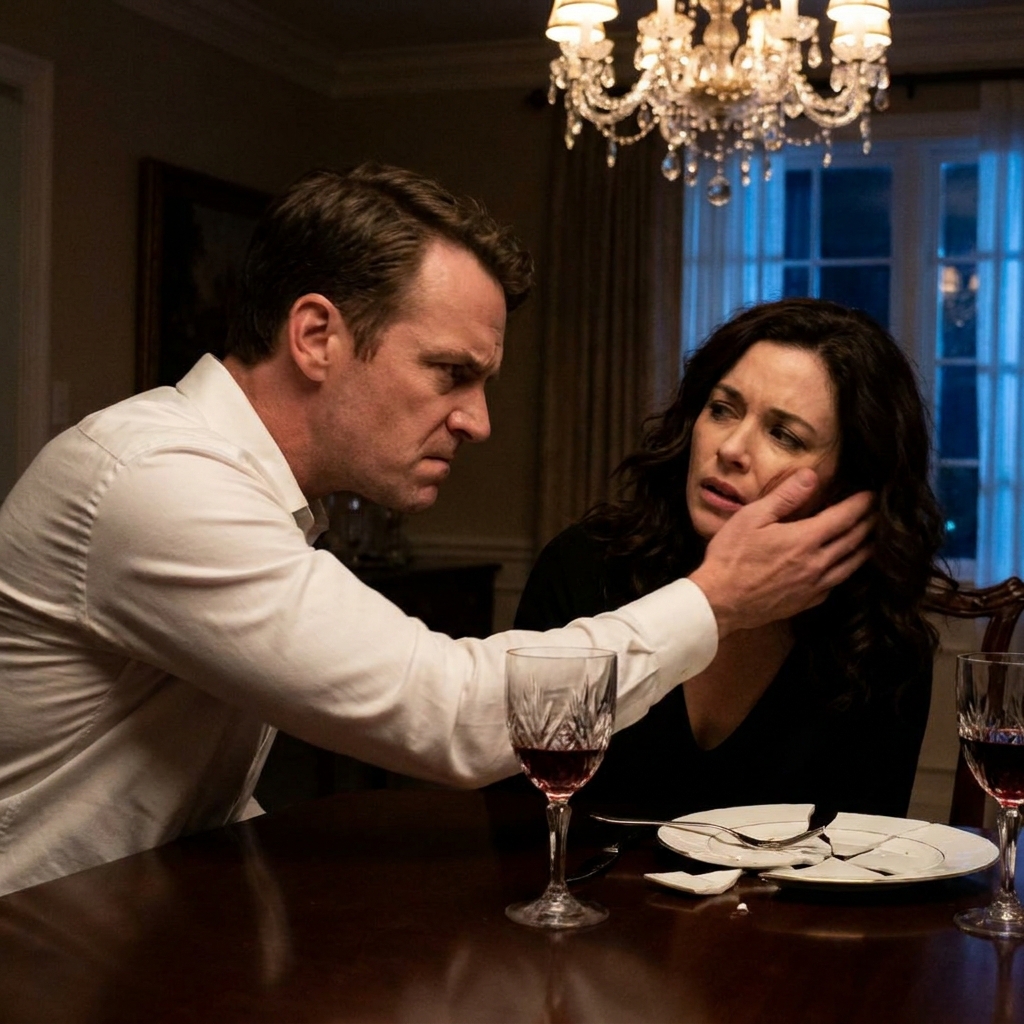
The first thing I heard when I reached my own back door was my mother saying, “In this house, I decide the rules.”
I stopped with Frederick’s birthday cake balanced against my hip.
Through the open kitchen window, twenty relatives laughed in my backyard beneath strings of blue-and-silver decorations I had never bought.
A seafood tower covered one table.
Bottles of bourbon stood beside crystal glasses.
Someone had hired a violinist.
And my mother, Teresa Bradley, was holding court in a new emerald dress.
“Connor works too much,” she told Aunt Betsy.
“That’s why he gives me the money.
Three thousand dollars every month.
He knows I’m the one capable of managing this family.”
My stomach tightened.
For eleven months, I had sent Mom that money because she said Amy needed help after Frederick was born—groceries, meals, diapers, occasional childcare while I worked long hours as a construction engineer.
I had believed her.
Betsy lowered her voice, though not enough.
“Where is Amy?”
Mom laughed.
“Where she belongs.”
Another voice asked what that meant.
“In the kitchen.
I told her to prepare everything. A woman who is financially supported needs to earn her place.”
My grip tightened around the bakery box.
I had left work early to surprise Amy.
The passenger seat of my truck held the blue dress she had admired online but refused to buy, and in my pocket was a tiny silver pendant engraved with an F.
I walked inside.
The kitchen looked like the aftermath of a restaurant shift.
Dirty platters covered every surface.
Grease floated in pans beside the sink.
Half-eaten food had been stacked wherever space remained.
Amy sat on a plastic stool.
Our son was in one arm.
With the other, she was washing dishes.
Her hair had come loose from its ponytail.
Her face looked gray with exhaustion.
She was chewing a piece of dry bread.
When she saw me, the bread fell from her mouth.
“Connor.”
It wasn’t relief in her voice.
It was fear.
“Your mother said I can’t stop yet,” she whispered.
“I still have to make the coffee.”
I put the cake down.
Then I touched Frederick’s forehead.
He was burning.
“Jesus, Amy.”
“He’s been feverish since noon.”
“Why isn’t he in bed?”
Her eyes flicked toward the backyard.
“She said everyone came for him.”
Something inside me cracked.
I lifted Frederick from her arms.
“Get your purse.”
“Connor—”
“We’re leaving.”
“She’s going to be angry.”
My wife was afraid of my mother inside our own home.
I got Amy and Frederick into the truck, called my pediatrician’s emergency line, then dialed 911.
I told the dispatcher there were people inside my house without my permission, that my sick child had been kept at a party, and that something about the situation felt wrong.
The patrol cars arrived six minutes later.
Mom exploded the moment Officer Hall asked whose name was on the property.
“Mine,” she snapped.
“No,” I said.
“It’s mine.”
She turned on me with a look so cold I barely recognized her.
“You don’t understand what you signed.”
Then she shoved Officer Hall.
Everything changed.
Police separated the guests.
Betsy began crying.
Mom kept screaming that Amy had poisoned me against my own blood.
And while everyone watched her, my cousin Mason slipped toward the side gate carrying a thick brown folder beneath his jacket.
An officer caught him.
“What’s in there?”
“Nothing.”
They opened it anyway.
I saw the original deed to my house, copies of my driver’s license, a notary seal impression, and a document stamped by the Davidson County register.
Officer Hall unfolded the top page.
His expression changed.
He looked from the signature at the bottom to me.
Then to my mother.
Then back to me.
“Mr. Bradley,” he said quietly, “according to this document, you signed your house over to your mother three months ago.”
I stared at him.
For several seconds, I could hear nothing except Frederick crying inside my truck.
“That’s impossible.”
Officer Hall kept his voice measured.
“Is this your signature?”
I snatched my eyes down to the page.
It looked like mine.
Not vaguely.
Not approximately.
Mine.
The slant of the C.
The cramped loop in the B.
Even the ridiculous upward stroke I had developed signing construction reports hundreds of times a month.
But I had never seen that document.
“I didn’t sign it.”
Mom laughed from beside the patrol car.
It was a short, contemptuous sound.
“You sign so many things, Connor.
How would you know?”
I looked at her.
Something about the satisfaction on her face frightened me more than the paper.
Officer Hall turned to Mason.
“Where did this come from?”
Mason’s face had gone white.
“I was just holding it.”
“For who?”
He looked at Mom.
She stopped smiling.
“Mason,” she said.
Popular Posts
→- 1
- 2
- 3
- 4




Recently Viewed
Stories you read recently will appear here.





