They were not being thrown out. They were being asked, for the first time in eleven years, to participate in the cost of their own lives.
Along with it came a full accounting, which Iris had insisted on and which I had resisted, because it felt petty, and which I now believe was the most important document of all. Eleven years of property taxes. Eleven years of insurance. Two roof repairs, one water heater, one air conditioning unit, the assessment after the hurricane. And at the bottom, an itemized total of the fair market rent they had lived in for free.
Four hundred and eighteen thousand dollars.
There was a line at the bottom in Iris’s dry lawyer’s language stating that no repayment of any past amount was being sought or would ever be sought, and that the figure was provided for informational purposes only.
I made her put that in. She thought it was unnecessary. I told her it was the only part that mattered.
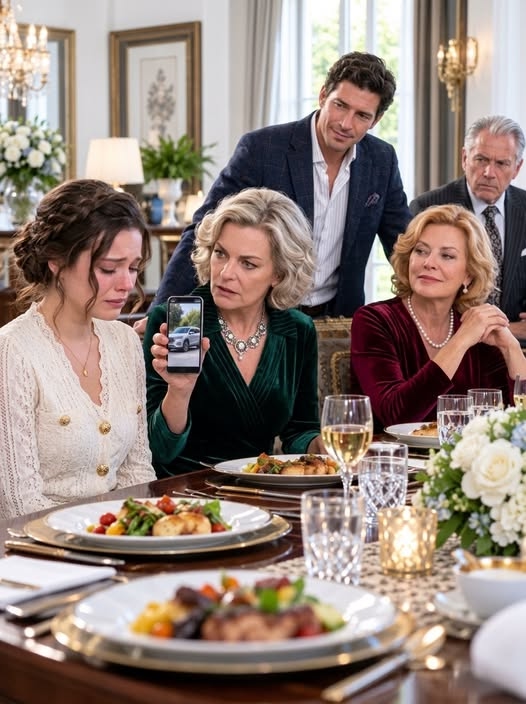
The second folder, the one with his name on it that he saw in the photograph, was different.
It contained a copy of Ernest’s will, which Austin had never read because he had assumed he knew what was in it. Under it, the house on Sixty Eighth Street passes to Austin and to his daughter Maya jointly, on my death, with Maya’s share held in trust until she is twenty five and untouchable by her parents until then. Ernest had put that clause in himself, and Iris told me later that when she raised the possibility, my husband had said only, “Yes. That one. Exactly that.”
The folder also held a letter from Ernest to his son, written in October in his own hand, sealed, which I had never opened and never will.
And it held one page from me. Twelve lines. I had rewritten it eleven times.
It said that I was not angry. That I loved him more than he had ever needed to know, because I had made the mistake of proving it so constantly that it had lost all its weight. It said that the apartment was his to keep for as long as he paid for it and that I hoped he would, because it was a good home and his daughter had grown up in it. It said that the animals were at the Humane Society on Northwest Seventy Ninth and that they had been well treated, and that I had never in forty years abandoned a living thing and had not started that morning, but that I was also not a kennel, and that if he had asked me instead of telling me, I would have said yes.
And the last line said this. I am going to be gone for one year. I will not be reachable most days. When I come back, I would like to have dinner with you and my granddaughter. That invitation has no conditions on it. It is not contingent on the rent or the apartment or an apology. It is simply an invitation, and it is the last thing your father asked me to give you.
Then I got on a ship.
I did not answer my phone for eleven days. That was not cruelty. It was the only way I knew to make a boundary hold. As long as I was available, everything I had done was a negotiation. Unavailable, it was a fact.
The first days were terrible. I want to be honest about that, because I think this is where these stories usually lie. I stood on a balcony over the Caribbean with a glass of wine in my hand and I was so frightened and so guilty that I could not taste it. I had abandoned my son. That is what a voice inside me said, in my own mother’s accent, over and over. Forty years of training does not wash off in the shower.
What saved me, and I am not exaggerating when I say it, was a woman named Ruthann from Sarasota, seventy four years old, on the same one year booking, who sat down next to me in the buffet on day four and said, “You’ve got the face. Whose funeral was it?”
I told her the whole thing.
She listened without interrupting, which is rarer than you would think, and at the end she said, “Honey, I did the same thing at sixty six. Three years of silence. He’s forty six now and we have Sunday dinner every week and he asks about my day like a human being.” She stirred her coffee. “It works. But not the way you want it to, and not on your schedule.”
She was right about all of it.
Austin’s first messages were furious. Then they were legal, forwarded from a paralegal friend of Chloe’s who had apparently told them there were grounds to contest something, which there were not, because Iris Delgado does not make mistakes. Then they were wounded. How could you, after everything, in front of my wife, what am I supposed to tell Maya.
I answered exactly one of them, from Cartagena, and my answer was four words. Tell her the truth.
Then came silence, for two months, which was harder to sit with than the anger had been.
Chloe cracked first, in her way. In April she sent a long message accusing me of humiliating her family and destroying her daughter’s stability, and then, eight lines from the end, without any transition, she wrote: we paid the rent.
That was the first payment. Eleven hundred dollars, on the first of April, out of an account Austin opened for it. Iris confirmed it and sent me a note that said only, First one cleared. Which is the whole point, isn’t it.
They made every payment. Every single month for the fourteen months that followed, including the two months after I got back, before anything else was settled between us.
Austin took a second job in June. I learned this from Mrs. Mary, not from him. Weekends at a parts distributor in Doral, on top of his work at the dealership. Chloe went back to work in August after nine years at home, at a dental office on Bird Road, three days a week at first and then five.
I heard about all of it secondhand and I cried over most of it, on a ship in the middle of the ocean, feeling like the worst mother who had ever lived.
In September, in Lisbon, I got a message from my granddaughter.
Maya was eleven. She had gotten her own phone that summer and had evidently gone hunting for me on it. Grandma are you on a boat. Mom said you went away. Are you coming back.
I sat down on a bench outside a church I cannot remember the name of and typed for twenty minutes and deleted all of it and finally sent: Yes, I’m on a boat. It’s very big and the food is too much. I am coming back in the spring. Would you like me to send you a postcard from every place I go?
She said yes.
I sent forty one postcards over the next seven months. She has them all in a box. She showed me, the first time I saw her again, and she had put them in order.
The turn, when it came, did not come from Austin. It came from Chloe, and I did not expect that, and I have had to revise a great many opinions because of it.
Popular Posts
→- 1
- 2
- 3
- 4




Recently Viewed
Stories you read recently will appear here.