The Yellow Legal Pad
Myra Hutton was forty-two, and that land had never come to her as a blessing.
Twenty years earlier, her father had handed her the parcel nobody wanted: eight hundred acres of stubborn clay, drainage problems, broken fencing, and a future everyone quietly assumed would fail. Her younger sister, Jocelyn, got the neat stretch near the highway. Easier soil. Better access. Better odds. Jocelyn sold it fast, spent the money faster, and called herself smart.
Myra stayed.
She taught herself soil chemistry from old library books. She borrowed money at ugly interest rates because no one was offering kindness. She lived through two winters in a trailer with a space heater that rattled all night because every dollar had to go back into seed, drainage tile, equipment, or debt.
Nobody came to help her. Not her mother, who said farming was a man’s gamble. Not her father, who told her he had already done enough by giving her the land. Not Jocelyn, who preferred to laugh about Myra’s mud boots and cracked hands whenever family gathered for holidays.
But years later, when the farm finally turned around, they came. Always with a reason. A roof emergency. A tuition crisis. A car down payment. A bill that couldn’t wait another week.
For years, Myra told herself this was what family meant. You helped when you had more. You didn’t keep score. You didn’t turn love into math.
Then one quiet Tuesday night, Marcus sat across from her at the kitchen table and slid over a yellow legal pad. On the last page was a number Myra had never forced herself to total.
$347,000.
That was how much she had given her parents, her sister, and the messes surrounding them over fifteen years.
Marcus hadn’t made the list to shame her. He had made it because he loved her enough to show her what her hope had been costing.
Then he said the one thing that made the room go cold.
“Tell them the sale fell through.”
If they truly loved her, he said, that truth would show itself the moment they believed she had nothing left to offer. If they cared about her, they would ask where she would sleep. They would ask how to help. They would ask whether she had eaten, whether she was safe, whether she needed them.
So the next morning, with her hands trembling around her phone, Myra called her mother and said the buyer had backed out.
Her mother’s first question was not where Myra would go. It was whether the money she planned to ask for next month was gone too.
Then Myra called Jocelyn. Her sister did not ask if she was okay. She snapped because Brianna’s tuition was due, and if Myra had really lost the sale, then what exactly was Jocelyn supposed to do now?
An hour later the family group chat lit up. Her mother said she had always known the farm would never work out. Jocelyn said Myra should have gone to college instead of clinging to dirt and pride. Todd asked what this meant for Brianna’s school payments. Her father said nothing at all.
The next day her mother called in a soft careful voice and said maybe it would be better if Myra did not come to the anniversary dinner that Saturday. There would be forty guests at the Rosewood Grill. Her mother said she didn’t want the mood affected.
Myra understood exactly what that meant.
Then Jocelyn arrived at the house without warning and walked straight into the kitchen and told Myra that if the sale had truly collapsed, she needed to sell the house quickly and make sure the family got their share before everything became more complicated.
They did not believe she was overwhelmed. They believed she was hiding money. They were not worried about her. They were worried the money had stopped.
On Friday, Jocelyn called again with a warm voice. Too warm. She said Myra should come to the anniversary dinner after all. Family was family. It would look strange if Myra wasn’t there.
Myra heard the rehearsal in every word.
Saturday came cold and sharp. Myra dressed simply in black slacks and a cream blouse. Marcus put on his navy sport coat and said almost nothing. He just touched the yellow legal pad before leaving, then tucked it into the inside pocket of his jacket.
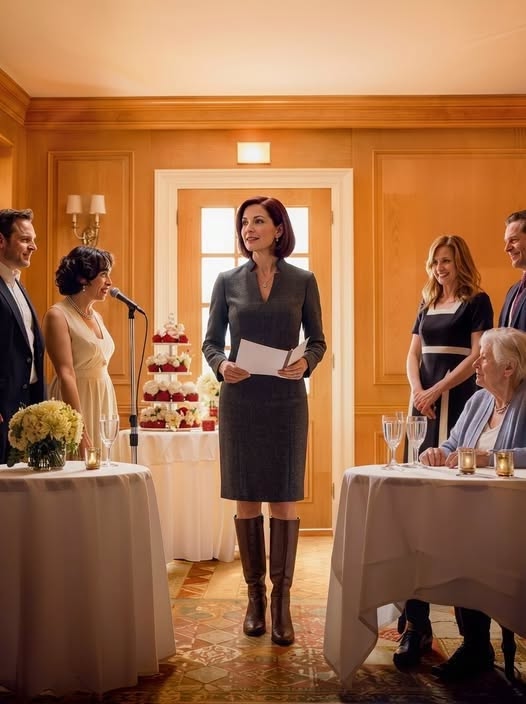
They drove past the grain elevator and into town, where the windows of the Rosewood Grill glowed gold against the dark. Inside, her mother glided between tables in her best dress, smiling like nothing had happened. Jocelyn stood near the front with one hand on a microphone stand.
Marcus turned off the engine.
Myra sat for one more second and looked through the glass at the people who had spent fifteen years reaching for her hand only when it held a check.
Then she opened the car door and walked in.
The room changed the moment guests noticed her. Conversations thinned. Her mother’s smile faltered. Jocelyn straightened too fast.
And when Myra saw the cream envelope on the podium beside her sister, she finally understood why she had suddenly been invited back. She was not there to be comforted. She was there to play a role in someone else’s version of the story.
My name is Myra Hutton, and I want to tell you what was in the cream envelope, and what Jocelyn did when she reached for that microphone, and what I said when she did — because the full account of that Saturday is not a single dramatic moment but the accumulation of everything the week had clarified, finally arriving at a place where it could be said out loud.
I want to back up one more time, because I think the full picture of what Marcus and I had built deserves to be understood before the dinner scene.
Popular Posts
→- 1
- 2
- 3
- 4




Recently Viewed
Stories you read recently will appear here.





