After my infidelity was exposed, my husband did not scream.
He did not throw dishes.
He did not pack a bag while calling me every name I already knew I deserved.
Michael simply stopped being my husband in every way that mattered.
He remained in the house.
He paid his share of the bills.
He changed the furnace filter when it needed changing and brought the trash cans back from the curb every Friday morning.
To anyone looking from the outside, we were still married.
Inside the house, we were two people serving the same sentence in separate rooms.
For eighteen years, I slept in the guest bedroom at the end of the hall.
The room always smelled faintly of laundry detergent, old paperbacks, and the lavender sachet I had tucked into the dresser drawer back when I still thought guests might visit.
Michael slept in the primary bedroom, the one we had painted soft gray together when Jake was seven.
He never asked me back.
I never asked to return.
I had betrayed him.
That was the sentence I used whenever the loneliness pressed too hard against my ribs.
I had betrayed him, so if he thanked me for dinner like I was a waitress at a quiet diner, I accepted it.
I had betrayed him, so if he stepped aside in the hallway to avoid brushing my shoulder, I accepted it.
I had betrayed him, so if birthdays, anniversaries, and Christmas mornings became careful performances around our son, I accepted that too.
The strangest thing about punishment is how quickly it becomes routine.
After enough years, you stop calling it cruel.
You call it normal.
By the time I retired, our house had become a museum of what we refused to say.
His recliner faced the television.
My sofa sat near the front window.
His mug stayed on the right side of the sink.
Mine stayed on the left.
There was a small American flag magnet on the refrigerator holding up the water bill, a reminder from one of Jake’s school fundraisers years ago.
There were family photos on the mantel, most of them taken at public events where smiling was expected.
In every one, Michael stood close enough to look like my husband but not close enough to touch me.
The affair had happened in 2008.
I could dress it up with explanations if I wanted to sound less ugly.
I was lonely.
Michael worked long hours.
Jake was growing older and needed me less.
I felt invisible.
None of that mattered.
I made a choice.
Then I lied about it.
When Michael found out, something in him went silent so completely that I spent years wishing he had shouted instead.
A shouting man gives you something to answer.
A silent man makes you answer yourself forever.
That spring, I fell into a depression so deep I can still remember the taste of it.
Metallic.
Dry.
Like pennies on the tongue.
I stopped eating full meals.
I stopped sleeping for more than an hour or two.
I moved through the house doing chores because chores gave me instructions when my own mind would not.
At 1:13 a.m. one night, after another evening of Michael speaking to me only about the electric bill, I swallowed too many sleeping pills.
I will not pretend it was noble.
It was not a plea for understanding.
It was not a dramatic gesture.
It was cowardice mixed with exhaustion and shame.
When I woke up, I was in a hospital bed.
My throat burned from the tube.
My stomach felt scraped raw.
My lower abdomen had a dull, deep ache that made me curl under the blanket.
Michael sat beside me, holding my hand.
That was what I remembered most.
His hand.
Warm.
Real.
The first touch in weeks.
“Don’t worry,” he said when I winced. “The pain is just from the stomach pumping.”
His voice was calm.
His thumb moved once over my knuckles.
I believed him because I wanted to believe he had chosen mercy.
I believed him because I had no right, in my own mind, to question anything.
When I came home, he moved me into the guest room.
He said I needed rest.
Then days became weeks.
Weeks became years.
The door between us never opened again.
Jake grew up inside that careful quiet.
He was old enough to sense the coldness but too young to name it.
He asked once, when he was in middle school, why Dad never sat beside me on the couch.
I told him marriage changes as people get older.
He looked at me in that direct way children do when they know an adult is lying badly.
Then he stopped asking.
That was one of the things I hated myself for most.
Not just the affair.
Not just the overdose.
The way my shame taught our son to walk softly in his own home.
After I retired, I finally scheduled the physical I had postponed for years.
The appointment was on a Tuesday morning.
The clinic smelled like hand sanitizer, paper masks, and burnt coffee from the waiting room machine.
A woman near the door coughed into her sleeve.
A television mounted high in the corner played a morning show nobody was watching.
I filled out the intake form with the careful handwriting of someone who has spent her life trying not to cause trouble.
Current medications.
Past surgeries.
Childbirth history.
Any unusual pain.
I checked the boxes quickly.
No surgeries.
One child.
Natural birth.
Dr. Evans came in with a tablet tucked under her arm and reading glasses pushed onto her head.
She was younger than me by maybe fifteen years, practical in the way good doctors often are.
She asked about my retirement.
She asked about sleep.
She asked whether I had been having discomfort.
I told her about the dull pressure I had been ignoring.
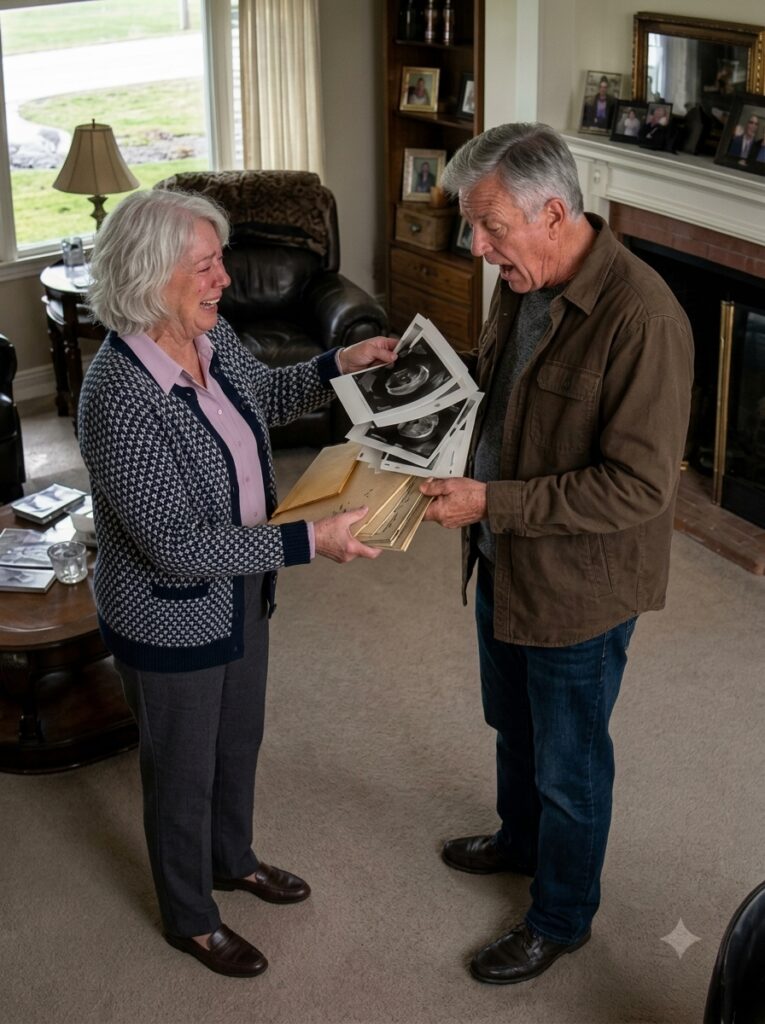
She ordered an ultrasound to be safe.
There was nothing frightening about it at first.
Popular Posts
→- 1
- 2
- 3
- 4




Recently Viewed
Stories you read recently will appear here.





