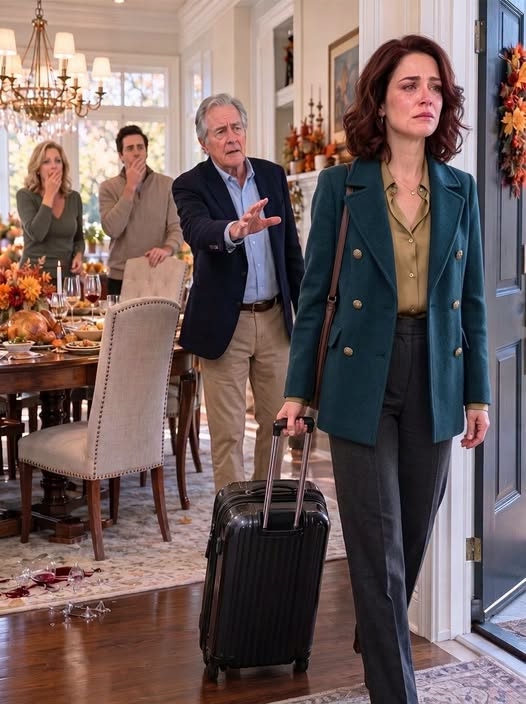
Naomi looked at him for a long time.
“No.”
His face fell slightly.
She continued.
“I also don’t hate you.”
He nodded.
“That’s fair.”
Naomi almost corrected the word again.
Instead she let it go.
Preston stood.
At the door, he turned.
“One thing.”
“Yes?”
“That night, when you canceled the transfer…”
Naomi waited.
“I thought you did it to punish me.”
“I know.”
“When did you actually decide?”
Naomi thought back.
The laugh.
The folder.
Mercer’s hand.
The kick.
The room.
“Before I made the call.”
“How much before?”
“About thirty seconds.”
“What happened?”
Naomi looked at him.
“You shoved me?”
“No.”
“Mercer did.”
“The folder?”
“No.”
Preston frowned.
“What?”
“The junior mechanic.”
“Luis?”
“Yes.”
“He looked afraid to disagree with you.”
Preston stared.
Naomi continued.
“That was when I knew I wasn’t buying the company I thought I was buying.”
Preston absorbed it.
Then nodded slowly.
“The seven hundred seventy million wasn’t lost because I insulted you.”
“No.”
“It was lost because everybody watched.”
Naomi’s voice softened.
“And knew how.”
He left without another word.
The revised closing took place forty-one days after the original.
No champagne.
No crowd.
No executives laughing beneath aircraft wings.
Just attorneys, bankers, engineers, and signatures.
Naomi insisted on completing the final inspection herself.
She returned to the same hangar wearing a navy suit and flat boots.
The green coat remained home.
Conrad met her at the door.
For a moment, both remembered the last time.
He held out his hand.
“Welcome back.”
Naomi shook it.
“Thank you.”
No one asked for identification.
That almost made her laugh.
Luis Ortega waited beside Aircraft Seven.
“Ms. Carter.”
“Luis.”
“You remember me?”
“You were the only person in the room smart enough not to laugh.”
He looked embarrassed.
“I wasn’t smart.”
“What were you?”
“Scared.”
Naomi appreciated the answer.
He opened an access panel.
“The pressure-system work is complete.”
“Show me.”
For the next forty minutes, Luis explained repairs.
Not simplified executive explanations.
Real ones.
Part numbers.
Inspection intervals.
Wear patterns.
Verification signatures.
Naomi asked questions.
Some good.
Some not.
Luis corrected her twice.
Both times he looked nervous.
The second time Naomi stopped him.
“What?”
He hesitated.
“You don’t have to apologize before correcting me.”
“I know.”
“No.”
She smiled.
“You know now.”
Luis nodded.
Then continued.
At the end of the inspection, Naomi looked toward him.
“One question.”
“Yes?”
“If I tell you this airplane needs to dispatch tomorrow and you believe it should remain grounded, what happens?”
Luis answered immediately.
“It remains grounded.”
“What if I disagree?”
“I document why.”
“What if the COO disagrees?”
“I document why.”
“What if the board is furious?”
He smiled.
“I document louder.”
Naomi laughed.
“Good.”
Grant, standing behind them, raised an eyebrow.
“Am I allowed to have opinions in this new company?”
“No.”
Naomi and Luis answered simultaneously.
Everyone laughed.
At 4:03 p.m., the final payment moved.
Not $770 million.
The initial closing release was $629 million after escrow and holdbacks.
The giant transaction screen turned green.
Naomi watched it without celebration.
Money moved silently.
Numbers changed.
Ownership transferred.
Twelve aircraft that belonged to Whitmore Vale that morning belonged to Carter Meridian by sunset.
The first aircraft entered Carter Meridian service six weeks later.
The remaining eleven followed gradually after inspection and documentation work.
Naomi refused to rush.
Some board members complained.
Every week of delay cost money.
She answered the same way every time.
“So does pretending.”
A year after the original canceled closing, Carter Meridian Global Response had completed 1,400 flight hours.
One aircraft carried cardiac specialists to a hospital system after commercial flights were grounded by weather.
Another moved engineering teams between three countries during a major infrastructure outage.
Two supported humanitarian logistics after a hurricane.
The rest served corporate travel, executive transport, and project operations exactly as planned.
The fleet earned money.
That pleased the board.
The safety record pleased Naomi more.
Whitmore Vale Aviation survived.
Smaller.
Less leveraged.
Preston’s name disappeared from active management but remained in the company history.
Conrad became executive chairman for two years, then retired.
Before leaving, he visited Naomi.
He brought a small object wrapped in black cloth.
She opened it.
The original acquisition folder.
A faint shoe mark remained on the cover.
Naomi stared.
“You kept it?”
Conrad nodded.
“Evidence at first.”
“Then?”
“A reminder.”
Naomi ran one finger across the mark.
“Of what?”
“That important documents are harder to recognize when you’ve already decided the person carrying them isn’t important.”
She looked at him.
“That sounds rehearsed.”
“I had two years.”
Naomi laughed.
Conrad pushed the folder toward her.
“It belongs to you.”
She shook her head.
“Keep it.”
“Why?”
“Your lesson.”
She stood.
“I already have mine.”
He knew what she meant.
The experience had changed Carter Meridian too.
Naomi ordered anonymous testing across her own companies.
Different people visited offices.
Called customer-service lines.
Applied for contractor access.
Entered executive buildings dressed in ordinary clothes.
The results embarrassed her.
Not catastrophically.
Enough.
A receptionist at one Carter Meridian tower treated a delivery driver dismissively.
A procurement manager ignored a small vendor until learning its annual revenue.
A senior executive bypassed a safety technician’s warning because he considered the technician too junior to delay a project.
Naomi read the report twice.
Then called Grant.
“We’re not better.”
He looked at her.
“We’re better than Preston.”
“That’s not a standard.”
Grant sighed.
“What do you want to do?”
“The same thing I asked them to do.”
“What?”
“Look.”
Policies changed.
Reporting lines changed.
Naomi began holding quarterly meetings without senior managers present.
Frontline employees attended anonymously or by randomly selected groups.
At first the sessions were awkward.
Then people realized she actually wanted uncomfortable information.
Not compliments.
One warehouse employee told her:
“You executives always say safety first until a customer threatens to leave.”
Naomi wrote the sentence down.
A flight coordinator said:
“People still talk differently when they know someone has a vice president title.”
Naomi wrote that down too.
Popular Posts
→- 1
- 2
- 3
- 4




Recently Viewed
Stories you read recently will appear here.