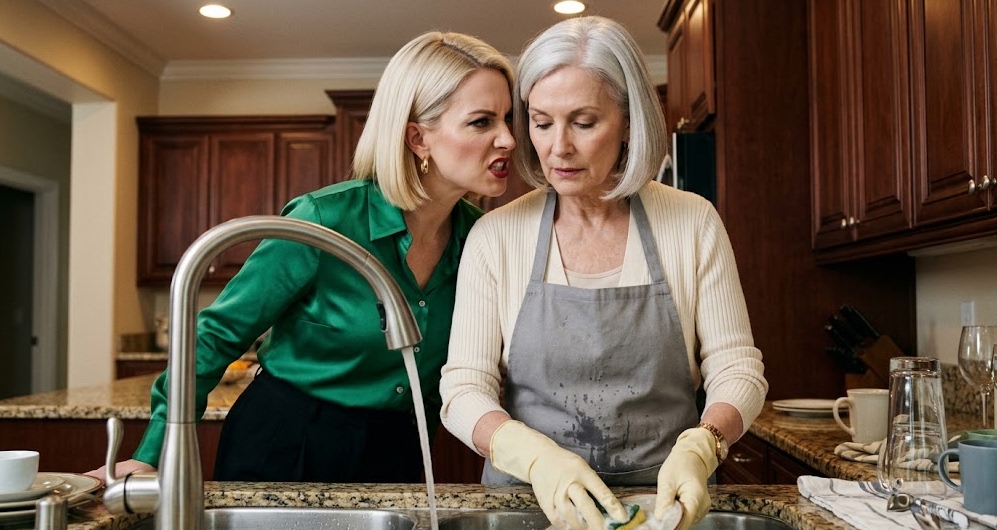
After a family dinner, while I was cleaning up in the kitchen, my daughter-in-law leaned close and whispered, “You old witch, I only tolerate you because of my husband.” I laughed it off and replied, “Don’t worry, you won’t be seeing me anymore.” The very next day, I had the locks on the house changed and…
After a family dinner, while I was cleaning up in the kitchen, my daughter-in-law leaned close and whispered, “You old witch, I only tolerate you because of my husband.” I laughed it off and replied, “Don’t worry, you won’t be seeing me anymore.” The very next day, I had the locks on the house changed and…
The first rays of dawn were just beginning to color the sky over the distant hills of Oakhill, a muted haze creeping across the horizon. In the quiet hum of my familiar kitchen, a deep unease that had been simmering for years had finally come to a boil.
At sixty-five, my mornings started early, often before the city had fully stirred, with a rhythm shaped by age and a restless mind. I sat on the edge of my bed and looked out at the highway, a faint ribbon already dotted with commuters. For thirty-two years, my husband Daniel’s car had been among them every single morning. He had been a man of quiet strength, a carpenter whose hands built the very foundations of the life we shared in this spacious four-bedroom house overlooking the valley. Then he was gone, taken by a sudden cardiac arrest on an ordinary Tuesday morning three years ago, and everything changed.
I slipped on my robe and quietly left the room, noting that this apartment had once been a canvas for Daniel and me. Every piece of molding, the cedar shelves in the pantry, the warm pine floors—we had polished every square inch with our own hands. Now it had become a battlefield, and I, Susan, felt like the losing side.
I walked barefoot across the hallway, avoiding the third floorboard that always let out a low groan. The quiet of dawn was the only hour when the house still belonged to me. The rest of the day belonged to the tension, the quiet resentments, and the subtle, sharp cruelties that had taken root when my son Kenneth moved his family in eighteen months ago.
I put the kettle on, reaching for my one small indulgence, a box of delicate Earl Grey tea. The tin was old, its painted floral patterns fading near the edges, a small luxury Daniel had bought me during our thirty-fifth anniversary trip to Savannah. The familiar scent of bergamot blossomed into the cool kitchen air, offering a fleeting illusion of stability.
Heavy, deliberate footsteps clicked against the hardwood hallway. Sylvia walked into the kitchen, wearing a pristine silk robe that cost more than my monthly grocery allowance. Her posture was taut, her expression one of perpetual dissatisfaction. She took one look at the stove, wrinkled her nose with exaggerated disgust, and said, “Susan, do you really have to brew that pungent stuff every morning? It makes the whole kitchen smell like a dusty attic.”
I took a steady breath, clamped my hands around the warm mug, ignored the jab, and started mixing batter for waffles, a tradition my son, Kenneth, had loved since childhood. The cast-iron waffle iron on the counter had been a wedding gift forty years ago, seasoned until it gleamed black and slick. I poured the rich buttermilk mixture into the center, listening to the satisfying hiss of heat against batter.
A faint creak signaled that Isaac, my grandson, was awake. The fifteen-year-old shuffled into the room with his shoulders hunched, headphones clamped over his ears, his tablet glowing in the dim light. He smelled faintly of sleep and adolescent indifference.
I looked at him with an encouraging smile and said, “Good morning, Isaac. Waffles will be ready in fifteen minutes, just the way you like them. Extra crispy on the edges.”
He didn’t even look up, merely nodding once while tapping away at his screen, completely engulfed in whatever digital world shielded him from the quiet toxicity of his parents’ marriage.
Faith, my older granddaughter, strode in next, already perfectly dressed for her day at community college. Her makeup was meticulous, but there were faint shadows beneath her eyes that spoke of late nights spent working double shifts at the bookstore downtown. She dropped her heavy tote bag onto a chair, looked at me, and snapped, “Susan, have you seen my blue sweater? I know you were organizing the laundry yesterday, and it’s disappeared.”
I calmly replied, “I washed it, Faith. It should be in your closet on the second shelf.”
She sighed with the theatrical frustration common to eighteen-year-olds, muttering, “I already looked there, but you’re always moving things around.”
She stomped down the hall toward the laundry room. Moments later, she returned holding the blue knit fabric, her expression softening as the anger drained from her posture. She bit her lower lip, embarrassed, as she said, “Oh, I’m sorry. I found it in the basket. Thank you, you’re the best.”
She pecked my cheek, the warmth of the small gesture settling into my heart, and grabbed a waffle straight from the cooling rack. But the brief calm was shattered by Sylvia, who stood in the doorway with her hands on her hips, her eyes sweeping over the kitchen cabinets like a prison warden inspecting a cell.
“Susan, have you moved my jars again?”
I looked up from the stove, wiping flour from my apron, and said, “I just wiped the shelves, Sylvia. Your things are exactly where you left them.”
Sylvia squinted, her tone dripping with passive-aggressive hostility. “I can’t find my hand cream. The one Kenneth gave me for our anniversary. You’re always rearranging my personal space.”
Faith rolled her eyes and muttered around a mouthful of waffle, “It’s on your nightstand, Mom. I saw it there right next to your vanity mirror.”
Popular Posts
→- 1
- 2
- 3
- 4




Recently Viewed
Stories you read recently will appear here.





