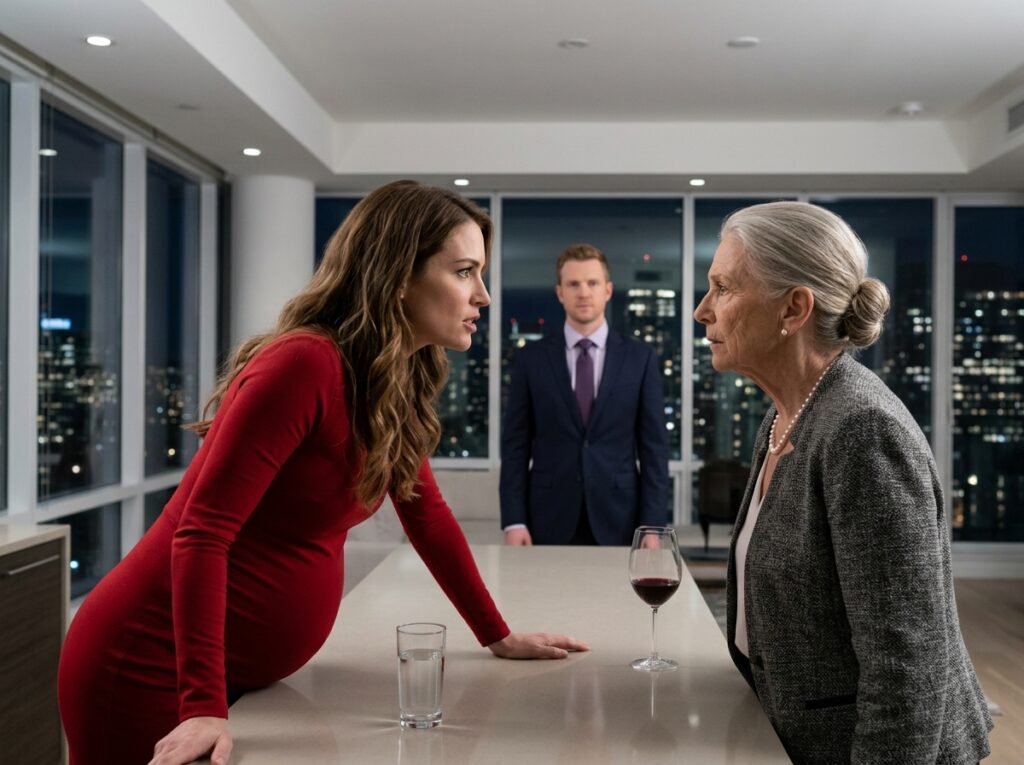
My Son and Daughter-in-Law Said, ‘We Heard You Bought a Penthouse — So We Came to Make Peace’
It had been eleven months since they told me not to come to their door again, since my son looked past me on his own porch and said I was making things uncomfortable for his family, since my daughter-in-law held the storm door closed with one hand and said it was better if I gave them space.
Now they were standing in the hallway outside my new home with a small potted orchid and the practiced softness of people who had rehearsed kindness.
Ryan hugged me and said he had been worried about me, and Jessica said she had always hoped we could find our way back to each other.
I am Margaret, sixty-seven years old, and for thirty-four years I was the steady one, the dependable one, the proper wife and mother who kept the house quiet and the bills paid.
When my husband Thomas died, the house we had lived in for twenty-eight years became very hollow, and the silence settled into the armchairs and the kitchen chairs and the long evenings where the rain moved slowly down the hospital windows I still saw in my sleep.
I had spent those years caring for everyone without ever sending an invoice for it, cooking and cleaning and raising our son Ryan, helping with their mortgage when they were young and hopeful, watching their daughter after school without being asked twice, believing that love was shown by being useful and never being a burden.
I believed if I was steady enough, they would stay. I believed if I was quiet enough, I would be kept.
After Thomas passed, Ryan and Jessica offered comfort in the way people offer a grocery run, brief and well-meaning and quickly finished. Then came the afternoon they drove me to a motel near the highway and said it would be temporary, that they needed the house for their family, that I would be more comfortable with space to heal.
The desk clerk gave me a key with a green diamond keychain, and I sat on the edge of a bed that smelled of cleaner and watched the traffic pass for three days, holding the warm weight of my own grief like something I could not set down.
I did not argue then. I was still the woman who believed rescue was the same as love, who thought if I did not make a fuss I would be invited back inside.
I learned, slowly, that I was done rescuing people who had not learned the lesson.
For months I lived carefully, listening to the weather that never moved on, saving what Thomas had left me, learning how to be alone without being abandoned.
When Ryan called to say they had heard news about a penthouse, about a change in my circumstances, his voice had the brightness of someone who had just remembered my name.
I did not correct him. I invited them to come and see for themselves.
And so they came to make peace, carrying their orchid and their readiness to forgive me for having been left behind.
I opened the door.
They stepped forward, smiling, and then they both froze at what they saw inside.
They froze just past the threshold, the small potted orchid still balanced in Ryan’s hands, their practiced smiles thinning into something pale and uncertain as their eyes moved past me and took in the room behind me.
It was not a grand entrance. There was no dramatic music, no sudden revelation staged for effect. There was only light, falling in long clean bars across Italian marble and glass, and the quiet, unmistakable language of a home that had not been assembled from scraps or second chances.
The Look That Told Me Everything
Ryan recovered first, or tried to. He lifted the orchid slightly higher, as if remembering it was meant to be an offering, and said, “Wow, Mom. This is… this is incredible,” and his voice had the bright, uneven quality of a man who had rehearsed one conversation and walked into another entirely.
Jessica did not speak at first. Her hand rested lightly on Ryan’s forearm, but her gaze had already traveled to the wall of windows that opened onto the city forty-two floors below, to the terrace where the late afternoon sky pressed against the glass, to the low cream sofa, the charcoal armchairs, the art with its clean, confident lines, the fresh lilies on the dining table that had been placed there that morning and had nothing to do with them at all.
I am Margaret, sixty-seven years old, and I have learned to read a room the way I once read weather, not for what it announces but for what it quietly intends to do. In that moment, I could see exactly what was happening behind their eyes. The calculation. The quick, involuntary reassessment. The soft shock of realizing that the woman they had filed away as manageable was no longer waiting in a motel room near the highway with a green diamond keychain in her palm.
“You should come in,” I said, and I stepped aside. My voice was even. Not cold, not cruel. Composed.
They stepped in as people do when they are unsure whether they have been invited or summoned, their shoes silent on the marble. Jessica set her purse down with deliberate care, as if to prove she belonged. Ryan placed the orchid on the console near the door, where it looked suddenly small and apologetic against the scale of the room.
“We were so worried when we lost touch,” Jessica said. She turned to me with that soft, rehearsed kindness I remembered from the hallway eleven months earlier, the same tone she had used when she held the storm door closed with one hand and told me it was better if I gave them space. “We heard things had changed for you, and Ryan said we should come right away. Family is family.”
Popular Posts
→- 1
- 2
- 3
- 4




Recently Viewed
Stories you read recently will appear here.





