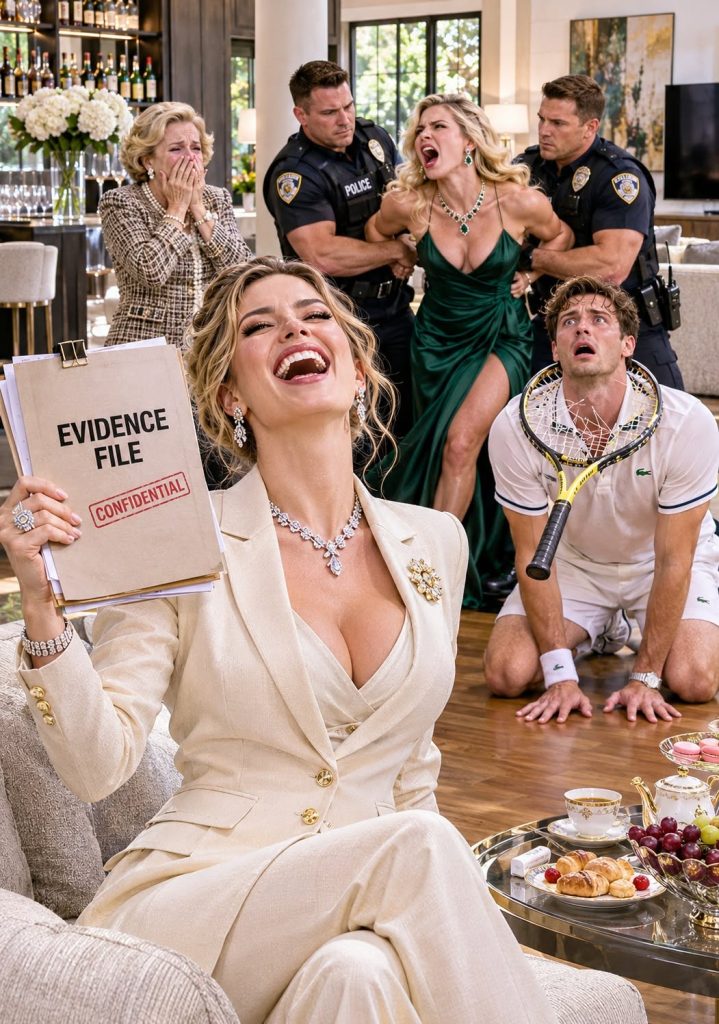
I returned from my business trip and found the locks changed on my own house with a note from my sister: “Find somewhere else to stay.” I drove to the condo I had hidden for years, went silent with everyone… and executed the turnaround they never saw coming.
Chap 1
The taxi pulled away from the curb, its red taillights smearing through the October drizzle, leaving me alone on the flagstone path of 742 Elmridge Lane.
The wheels of my Hartmann carry-on were wet from the tarmac at O’Hare, kicking up a fine spray of grit against the hem of my camel wool coat. It was 11:42 on a Thursday night. I had spent the preceding seventy-two hours in a windowless boardroom in downtown Chicago, dismantling an eight-hundred-million-dollar logistics merger where the target company had attempted to bury twelve million in uncollectible receivables beneath three layers of shell corporations.
As a senior forensic acquisition auditor for Vance & Sterling LLP, my life was measured in microscopic discrepancies—the errant digit in an Excel macro, the faint pixelation of a forged notary seal, the paper trail people believed was too mundane for anyone to trace.
I was exhausted down to the marrow of my shinbones. All I wanted was to step into my foyer, kick off my pumps, pour two fingers of Highland Park into a crystal tumbler, and listen to the rain drum against the skylights of the house I had bought, paid for, and maintained with nine years of sixty-hour workweeks.
Then I reached for the deadbolt.
My key—the heavy, silver-plated Medeco key I had carried on my ring for seven years—slid into the cylinder three-quarters of an inch and jammed with a dull,
hollow metallic scrape.
I frowned, pulling it back. I wiped the key with the corner of my silk scarf, thinking some grit from my suitcase handle had lodged in the teeth. I tried again. It refused to turn.
I stepped back, blinking through the misty halo of the carriage lamp overhead, and my gaze fell upon the hardware.
The aged, brushed-pewter mortise set my father had helped me restore when I closed on the property was gone. In its place was a brand-new, garish, hardware-store brass deadbolt, the screws visibly stripped where someone had hurried with a power drill.
Directly beneath the lock, affixed to the dark mahogany door with four strips of blue painter’s tape, was a white index card. On it, written in the flowing, rounded cursive my sister had practiced since middle school,
were six words:
Find somewhere else to stay.
A cold, electric sensation prickled along the nape of my neck. It was not fear. It was the specific, freezing clarity that hits an auditor when an escrow ledger suddenly drops by six figures without an explanatory debit memo.
Behind the sheer linen curtains of the living room window, a warm yellow light spilled onto the wet lawn. A shadow crossed the glass—tall, thin, moving with the languid entitlement of someone walking through their own quarters.
I did not pound on the wood. I did not scream. I pressed the bronze doorbell button and held it down for four seconds. I released it, waited through the silence, and pressed it again.
Inside, muffled footsteps padded across the white oak floorboards I had paid nine thousand dollars to have sanded and sealed the previous spring.
The brass deadbolt turned with an oily click. The door cracked open three inches, catching sharply against the steel security chain.
My sister, Brooke Lane, stood in the opening.
She was twenty-nine years old, fourteen months my junior, with our mother’s wide hazel eyes and the delicate, pointed chin that had spent three decades absolving her of every consequence she had ever incurred. She was wearing my emerald-green Italian silk blouse—the one I had purchased in Milan during the pharmaceutical audit two autumns ago, the one that still carried the cedar scent of my walk-in closet.
She smiled through the three-inch gap. It was a slow, luxurious, theatrical smile, the look of an understudy who had just watched the lead break her ankle on the opening night.
“Oh,” Brooke purred, resting her cheek against the doorframe. “You’re back early. Flight wasn’t delayed?”
I looked at the emerald blouse, then down at the cheap brass lock, and finally into her eyes.
“Open the door, Brooke.”
The smile didn’t waver; it merely tightened at the corners, hardening into porcelain. “No.”
The word landed between us, cold and clean as a river stone.
“This is my house,” I said, my voice dropping into the quiet, flat register I used when delivering an adverse finding to a board of directors. “You are wearing my clothes. Remove the chain.”
Popular Posts
→- 1
- 2
- 3
- 4




Recently Viewed
Stories you read recently will appear here.





