Chapter 1
“Hold on to me, sweetheart,” I whispered, pulling my cashmere blazer tighter around her. She couldn’t have weighed more than forty-five pounds. A healthy eight-year-old girl should have been sturdy, brimming with boundless, stubborn energy. Instead, her thin collarbones felt as fragile as sparrow wings beneath my hands.
“Dad, are we in trouble?” she asked in a trembling voice that caught in my throat. “Grandma said if I made a scene in front of the city councilmen, she’d throw away Mr. Bear.”
My jaw clenched so tightly that a muscle twitched in my cheek. “No, sweetheart. You didn’t do anything wrong. You will never, ever be in trouble for asking for food. Look at me, Lily.”
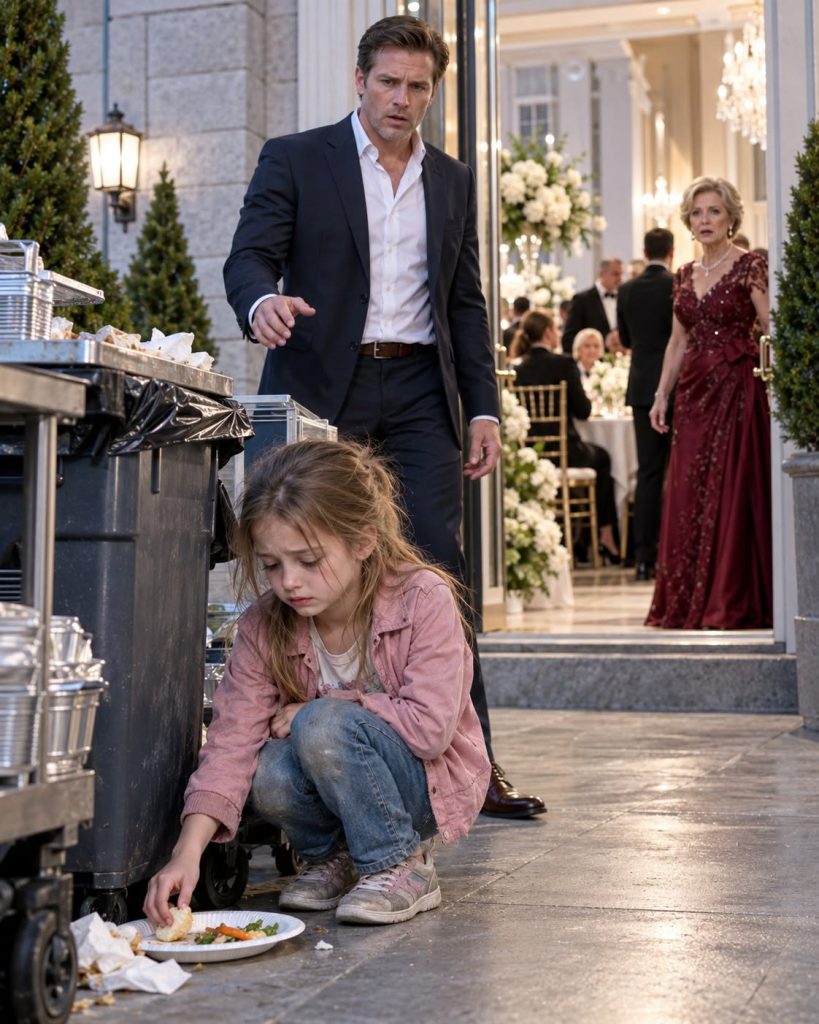
I set her down on the hood of my truck under the glare of the halogen security floodlights. Her hazel eyes—the exact same shade as her mother’s—stared up at me with a terrifying mixture of awe and dread. Her hair, which had once fallen in soft golden curls, was matted and uneven, clearly hacked off with dull kitchen shears. On her wrist, and faintly yellowing along her cheek, was a bruise that looked like the distinct imprint of an adult’s fingers.
“Where is Mr. Bear right now?” I asked softly, keeping my breathing steady.
“In the shed,” she whispered, pointing toward the detached outbuilding beyond the hedge. “Under the floorboards, so the mice don’t chew his ears.”
“Stay right here in the truck. Lock the doors. I’m going to get your teddy bear, and then we’re leaving.”
“Don’t let Grandma see you,” she pleaded, clutching my sleeve. “She locks the yard dogs up until midnight, but she has the keys to everything.”
I settled her comfortably into the heated cab of my Ford F-250, engaged the child locks, and sprinted across the impeccably manicured rose gardens my father had planted thirty years ago. The estate was valued at six million dollars. The landscaping maintenance alone cost twenty thousand dollars a season.
Behind the third detached garage stood what my family had always called the gardener’s tool shed: a dilapidated pre-war wooden outbuilding with peeling gray paint and a rusted padlock hanging from an iron hasp.
I pushed the door open. The hinge creaked into the night.
The smell hit me first: damp earth, mildew, rotting wood, and the distinct, sweetish stench of rodent droppings. A solitary twenty-watt bulb dangled from a frayed wire above an overturned plastic milk crate. Directly on the cracked concrete floor lay a water-stained wool blanket, folded in half. A plastic bucket sat in the corner next to a jug of tap water.
A child’s drawing was taped to the unfinished wall studs with electrical tape: a stick-figure woman, a tall man wearing a yellow hard hat, and a little girl holding a red balloon, all standing beneath a lopsided sun.
Underneath the milk crate, wedged into a hollow left by the rotted baseboard, was a torn teddy bear missing a button eye. Tucked beneath the bear was a single slice of white bread, hard as plaster, wrapped in a paper napkin. She had been hoarding scraps.
I dropped to my knees on that cold, unforgiving concrete, clutching the stuffed animal to my chest, and let out a sound somewhere between a gasp and a sob.
For thirty-six months, I had wired twelve thousand dollars on the first of every month from my business operating account directly into the checking account my mother had opened for Caroline and Lily. Four hundred and thirty-two thousand dollars. I had worked eighty hours a week pouring concrete in Boston, bidding on real estate developments in Stamford, and missing birthdays and holidays because my mother had told me, “Daniel, darling, Caroline needs time to recover from the divorce. Seeing you only agitates her. She doesn’t want your visits; she wants your financial security. Let me take care of the child. I raised you, didn’t I?”
Chapter 2
I had believed her. I had trusted the woman who gave me life while she locked my daughter in a shed like an unwanted stray animal.
I grabbed the teddy bear along with Lily’s crude drawing and walked back to the truck. My hands were shaking—not from fear, but from a cold, volcanic rage that strips away everything superfluous.
When I climbed behind the wheel, Lily reached out and took the bear, burying her nose in its threadbare fur. “You found him.”
“I found him. And you’re never going back there again.”
I threw the truck into reverse, spun a tight turn across the immaculate gravel turnaround—flinging stones against my mother’s imported boxwood hedges—and tore out through the wrought-iron gates.
My phone on the dashboard immediately lit up with an incoming call: MOTHER.
Popular Posts
→- 1
- 2
- 3
- 4




Recently Viewed
Stories you read recently will appear here.





