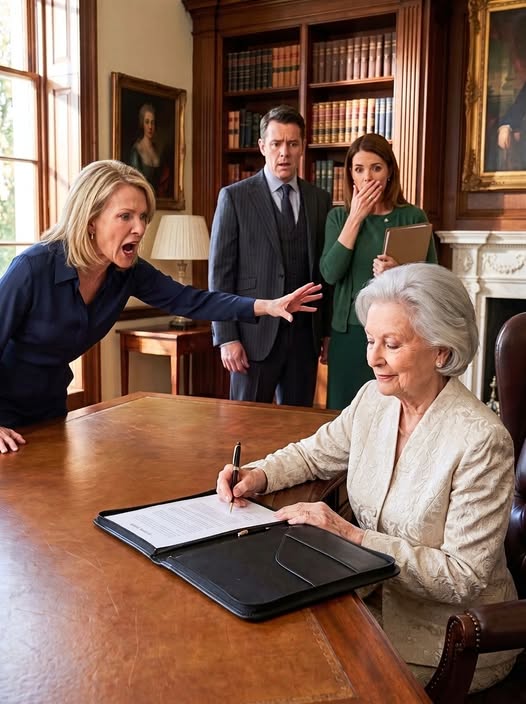
At seventy seven years old, I carefully dressed for the formal dinner party at my son’s residence after having transferred ninety three thousand six hundred dollars to cover his mounting expenses that year alone, but then his second message flashed across my screen stating that I was not invited and his wife did not want me there. By the time the morning sun rose over the horizon, one hundred and seventy four separate financial authorizations had vanished from their accounts.
“Mother, the arrangements for this evening have shifted,” Benjamin texted at six eighteen in the evening. The second notification arrived before I could even manage to hoist myself up from the sturdy kitchen chair. “You are not invited to the townhouse tonight because my wife does not want you present at the table.”
My navy blue dress still bore the visible indentations of my palms where I had smoothed the fabric down moments before receiving the news. Outside, the rain tapped against the kitchen windowpane in small, uneasy rhythms. The tea kettle clicked once on the stove, standing empty and slowly cooling, while the room filled with the scent of lemon furniture polish, aged timber, and tea that had grown bitter from sitting too long.
A framed portrait of Thomas watched me from the stone mantelpiece. The silver frame felt icy beneath my fingertips as I touched it. I had meticulously laid out the pearl earrings he had gifted me for our fiftieth anniversary. Next to them rested the brochure for the townhouse that Benjamin had mailed to me back in March, filled with images of white trim, staged lamps, smiling couples, and promises printed on thick, expensive cardstock.
“This is for you too, Mother,” Benjamin had assured me when he sent it.
I had believed his words because mothers are conditioned to interpret almost anything as an expression of love even when it is merely a son using them for his own convenience. My mouth tasted sharply of metal. The wall clock struck six twenty. I read the words displayed on the screen repeatedly until they stopped appearing like a simple mistake.
You are not invited.
Genevieve had never shouted at me. Genevieve never raised her voice for any reason. Her particular brand of cruelty arrived through polished heavy doors, perfectly folded linen napkins, and sentences delivered with a tone soft enough for her to deny ever saying them later.
“Your mother tends to make social situations feel rather awkward,” she had remarked to me once, smiling broadly while sipping a fourteen dollar latte that I had paid for myself. “She means well, of course, but it is still a bit uncomfortable.”
I had laughed when she said it. It was a small, practiced laugh, the kind that women often use when they are desperately trying not to become a problematic inconvenience. My hand found the back of the kitchen chair for support. The wood felt hard and familiar under my palm as I sat back down and opened the old drawer in my mother’s antique desk.
The file folder inside was clearly labeled BENJAMIN.
Inside the folder were fifteen years of quiet, desperate rescues. There were tuition checks, insurance premium drafts, mortgage payments, private country club fees, and emergency wire transfers that somehow became necessary every single month. There was a two thousand eight hundred dollar preschool payment for my granddaughter and a six thousand four hundred dollar repair bill that Genevieve had flippantly described as a temporary setback. Paper develops a distinct smell when it has been trapped in a drawer for far too long, characterized by dust, drying ink, and years of accumulated grief.
At six forty seven in the evening, my granddaughter sent me a message.
“Grandma, are you going to be arriving soon?”
I stared at her words until my eyes burned with unshed tears. Children rarely have the capacity to understand which of the adults in their lives are busy building walls around them.
I typed a reply to her.
“I cannot come tonight, my sweet girl, but I love you very much.”
Then I reached for the landline telephone resting on the counter. I did not call Benjamin, and I certainly did not call Genevieve. I did not intend to beg for a seat at a dinner table that I had been essentially financing for years. My voice did not waver or shake when I finally spoke to the bank representative.
The woman on the emergency help line asked me to verify my identity. I recited my birthdate, Thomas’s middle name, the last four digits of my social security number, and my secret security phrase without hesitating.
Then she asked me which specific authorizations I would like to terminate immediately.
“I would like to cancel every single one of them connected to Benjamin Kelley,” I said firmly.
A small pause followed my request. Then, the sound of keys clicking echoed through the line.
That specific sound represented a mother finally remembering that she was still a human being with rights.
At seven oh three, I typed one single sentence to my son.
“Since I am no longer invited, you and your wife can begin paying for your own lifestyle from this moment forward.”
I hit send, powered off my mobile phone completely, and unclasped the pearls from my neck. By eight eleven the following morning, I was sitting across from Rebecca at the First National Bank, with the thick folder spread open between us. She had been a friend to our family for twenty two years, had approved Thomas’s very first retirement account, and had even sent a lovely arrangement of flowers when he passed away.
She did not offer me any pity, which was exactly what I needed.
“Are you absolutely certain about this, Mrs. Kelley?” she asked me.
I placed both of my hands flat on the mahogany desk. My veins stood out, looking like blue tracery beneath my aging skin, and my wedding band felt loose on my finger.
Popular Posts
→- 1
- 2
- 3
- 4




Recently Viewed
Stories you read recently will appear here.





