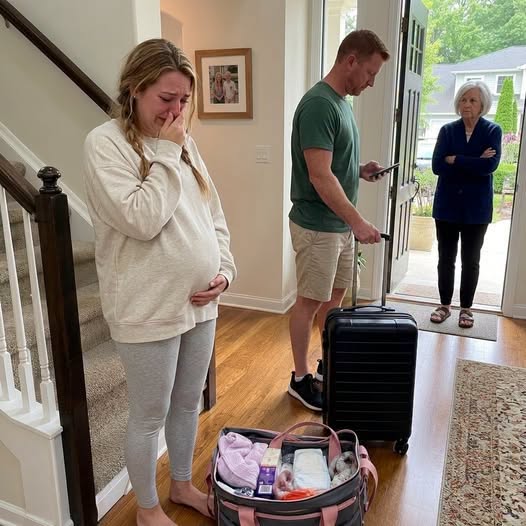
The Shape of After
The morning I brought Noah home, I forgot to eat breakfast.
Not in the way I sometimes forgot breakfast before, the busy-morning oversight of someone running late. This was a different kind of forgetting, the kind that happens when something so large has entered your life that it reorganizes every prior need and priority around itself. I drove home from the hospital with Clare in the passenger seat and Noah strapped into the car seat in the back, and every few minutes I glanced in the rearview mirror at his sleeping face, and I thought: he is here, he is real, he is mine, and I cannot believe he is here.
The house was smaller than I remembered it being that morning.
That is always the way, Clare had told me, when you bring a person home for the first time. The space contracts to accommodate what is most important. I did not know what she meant until I stood in the entryway with Noah in his carrier and looked at the living room where I had spent the previous week on the couch, watching the ceiling and thinking about every possible version of what came next, and understood that the room had changed while I was away. Not its dimensions or its furniture or the particular quality of light it caught in the late afternoons. Something less visible than that.
It felt like it had a purpose now that it had not quite had before.
“Tea,” Clare said, already moving toward the kitchen with the decisive efficiency she had been deploying on my behalf for two weeks. “You need to eat something. When did you last eat?”
“Hospital. Last night.”
She looked at me over her shoulder with the expression she reserved for statements she found both concerning and unsurprising.
“Sit down,” she said. “I’ll make toast.”
I sat in the armchair near the window with Noah against my chest, his weight both improbable and completely right, and I listened to Clare in the kitchen and watched the light move across the floor and thought about the word after.
Before and after are the architecture of certain lives. There is the before-Noah and the after-Noah and these are not the same country; they share a name and a body and most of the same memories, but the person who drove to that hospital was organized around a different center of gravity than the person who drove back. I had been told this would happen. I had not understood what being told would fail to convey about the actual experience of it.
My phone was in my bag. I had not looked at it since leaving the hospital.
There were messages from Ethan. I knew this without looking because Ethan had been generating messages at a consistent rate for two weeks, and there was no particular reason to believe the messages had stopped. His messages were elaborate in their construction, which I had come to understand as the signature of someone who is more interested in performing a feeling than in actually feeling it. They were full of language that sounded like accountability and contained very little of its substance. He was sorry, he said. He wanted to do better, he said. He didn’t understand why things had changed, he said, which was the most revealing sentence he had produced, because it told me that three years of marriage had left him without the basic observational equipment required to understand why things had changed.
I had loved him once in the uncomplicated way that love is uncomplicated before you understand the person you are loving.
By the time I understood him, I loved him differently, and then less, and then in the way that people love things they are still entangled with despite having understood that the entanglement is not good for them.
Now I had Noah, and the entanglement had a new shape, and the shape required me to make decisions I had been delaying for months.
Clare put toast on the table beside me and sat in the chair across, wrapping both hands around her mug in the way she always did, a habitual small comfort she had practiced since I had known her.
“Any updates from Ethan?” she asked.
I looked at my phone. Picked it up. There were six messages since yesterday, which was not the most I had received in a single day but was close. I did not open them. I set the phone facedown.
“More of the same,” I said.
“You don’t have to respond today.”
“I know.”
“Or this week,” she said. “There’s nothing he needs from you that can’t wait until you are ready to give it.”
I ate the toast because she had made it and because Noah deserved a mother who had eaten breakfast and because I was trying, in the specific and unglamorous way of trying, to take care of myself in the ordinary ways that are easiest to neglect during extraordinary times.
The morning passed in the rhythm of a newborn’s first days at home, which is to say it passed without any conventional rhythm at all, structured only by Noah’s needs and the responses those needs required. Clare was extraordinarily good at being present without being intrusive, at anticipating what was needed without taking over, at knowing when to hand me something and when to sit quietly and when to quietly disappear so that the room belonged only to Noah and me.
I thought about my life before Noah, and the specific shape Ethan had occupied in it.
We had met at a work event, which is a sentence that contains almost everything you need to know about how we began: formal setting, good lighting, everyone performing their best version of themselves. Ethan was charming in the way of men who have learned that charm is a skill and have practiced it into something that feels spontaneous. He was funny. He was attentive. He asked me questions and listened to the answers with the focused quality of someone who is genuinely interested, and I mistook this quality, as people often mistake it, for genuine interest.
Popular Posts
→- 1
- 2
- 3
- 4




Recently Viewed
Stories you read recently will appear here.





