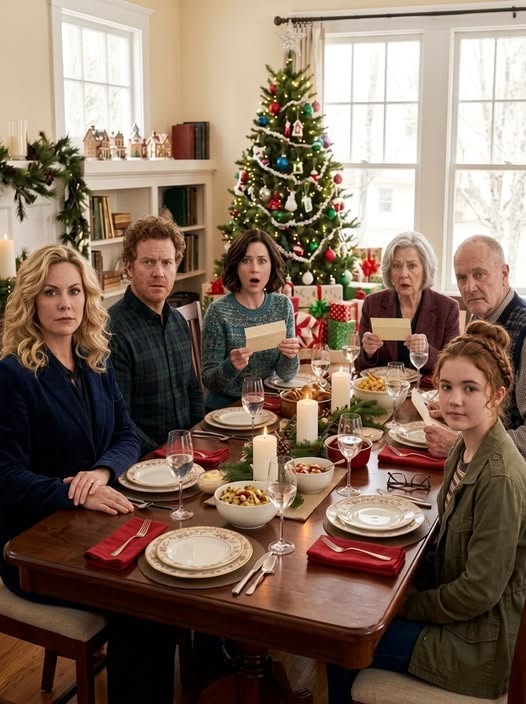
I am the eldest of three sisters, and my name is Claire.
You already know what “oldest” often means if you grew up in a household like mine, with soccer Saturdays, church potlucks, and a never-ending group text.
It means you learn early on how to anticipate other people’s needs, manage stress, remember birthdays, provide the appropriate casserole, and ensure everyone gets home safely.
The performance was Tessa, the middle sister. The person who, without even trying, could make a room spin around her. The baby was Rachel, the youngest.
Everyone thought it was sweet, and she got away with it all. Additionally, I was the one who cleaned up after everyone else.
I promised myself that I would do things differently after I became a mother. I promised myself that I would not allow my daughter to inherit my family’s habits.
When Maya was three years old, I took her in. She watched the world quietly, as if she didn’t trust it yet, and she had these large, serious brown eyes.
She was cautious, not because she was cold. As if she had discovered early on that safety could vanish at any time.
I was buckled up in a brand-new booster seat in the rear seat of my automobile when she called me Mom for the first time.
She spoke as though she was trying to see whether the word would shatter. After dropping her off at preschool, I sobbed by myself in the parking lot after grinning till my cheeks ached.
I promised her right from the start. In my family, she would never feel unwelcome. Never again. I really did mean it.
Then I saw my family repeatedly demonstrate how simple it is to claim to love a child while treating her as if she were unnecessary.
Usually, it was insignificant enough to ignore. My mother presented Maya to the neighbourhood as Claire’s girl, treating her more like a charming project than her grandchild.
Tessa stated “your daughter” rather than “my niece,” giving the impression that Maya was mine but not theirs.
When Maya offered to assist in the kitchen at Thanksgiving, someone would answer, “We’re fine,” without even looking up.
In contrast, Rachel’s children could enter, demand whipped cream, and draw a large crowd.
I made an effort to think it was awkwardness. Modification. traditional unease with everything that didn’t fit their image. However, Maya saw. She was always perceptive.
She informed my dad she wanted to be an artist when she was six years old. She would require something more useful than that, he replied with a nice smile.
On Christmas Eve, when she was eight years old, she handed my mother a drawing of our family that included her, my husband Ethan, and me.
After saying “thank you,” my mother put it on the counter and didn’t bring it up again.
Later, Maya questioned why it wasn’t on the refrigerator like the drawings from the other cousins.
I couldn’t think of a response that didn’t seem like betrayal as I stood there with dishwater on my hands and stared at snowman-shaped magnets.
Maya persisted in her efforts.
That is the aspect of children who have previously experienced loss that others do not comprehend. They don’t always misbehave. They occasionally act in the other way.
They become into silent tiny masters of winning affection. They observe, make adjustments, offer, smile when appropriate, and discover what makes adults feel at ease.
Maya didn’t ask for attention. She requested permission. She didn’t think she fit in. She hoped.
Maya was so cautiously happy when Tessa got engaged last spring—huge announcement, big ring, big caption online—that it tightened my throat.
She began using her phone to browse outfits and save photos as if she were using her fingertips to create a dream.
She wanted to know if she should wear her hair down or up. She wanted to know if she should do her nails in a neutral color. Would it be strange to bring a card, she asked?
She said, “She’s my aunt,” as if it would be safer to say it out.
Maya herself created a card for Tessa. Cut out tiny wedding bells, adhered them with excessive glitter, then carefully wrote “Congratulations” in bubble letters.
She extended both of her hands in the manner that children do when they truly want you to realise how important something is.
Laughing, Tessa replied, “Aww, that’s sweet,” kissed Maya’s forehead as if it were a picture opportunity, and threw the card in the back seat of her car.
I discovered it there two weeks later, half-crumpled beneath an empty coffee cup, with glitter peeling off as if it had been touched with a single, thoughtless swipe.
Maya was not shown by me. When she wasn’t looking, I threw it away and spent a long time with my hands under the running water at the sink, trying to convince myself that it was nothing.
Then the invitation to the wedding arrived.
Tucked between a neighbor’s holiday letter and a coupon flyer, it arrived on a Tuesday.
The paper was heavy and the envelope was thick—the kind individuals use when they want everyone to know that money was spent.
Elegant script was used to print my name. No Claire and her family. Just my name.
I brought it inside and placed it on the counter in the kitchen. With one earphone in and a pencil tapping quietly, Maya was working on her schoolwork at the table. It was quiet because Ethan arrived late to work.
With caution, I opened the packet. The interior had a floral and fresh ink scent. place. dress code. RSVP URL.
Then I noticed it.
Only adults. 18 or older. strictly enforced. There are no exceptions.
I read it twice. The phrases could then be altered a third time, more slowly, by focusing more intently.
Maya raised her head. Before you talk, kids can read your face. Maya in particular. She seemed to be preparing for impact as her gaze darted from the card to my mouth.
Popular Posts
→- 1
- 2
- 3
- 4




Recently Viewed
Stories you read recently will appear here.





